
“Muyi, la legende du village des femmes”
Synopsis
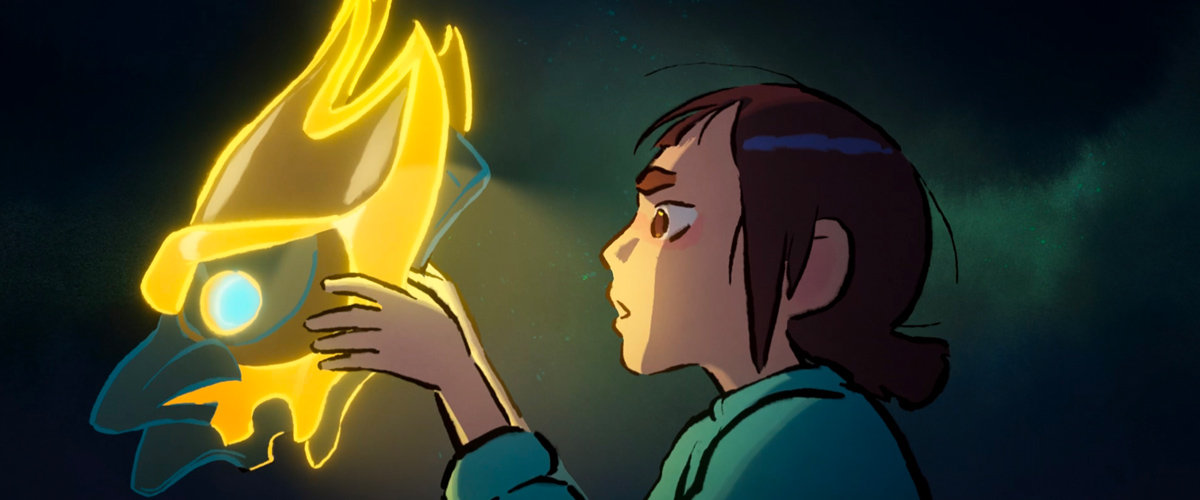
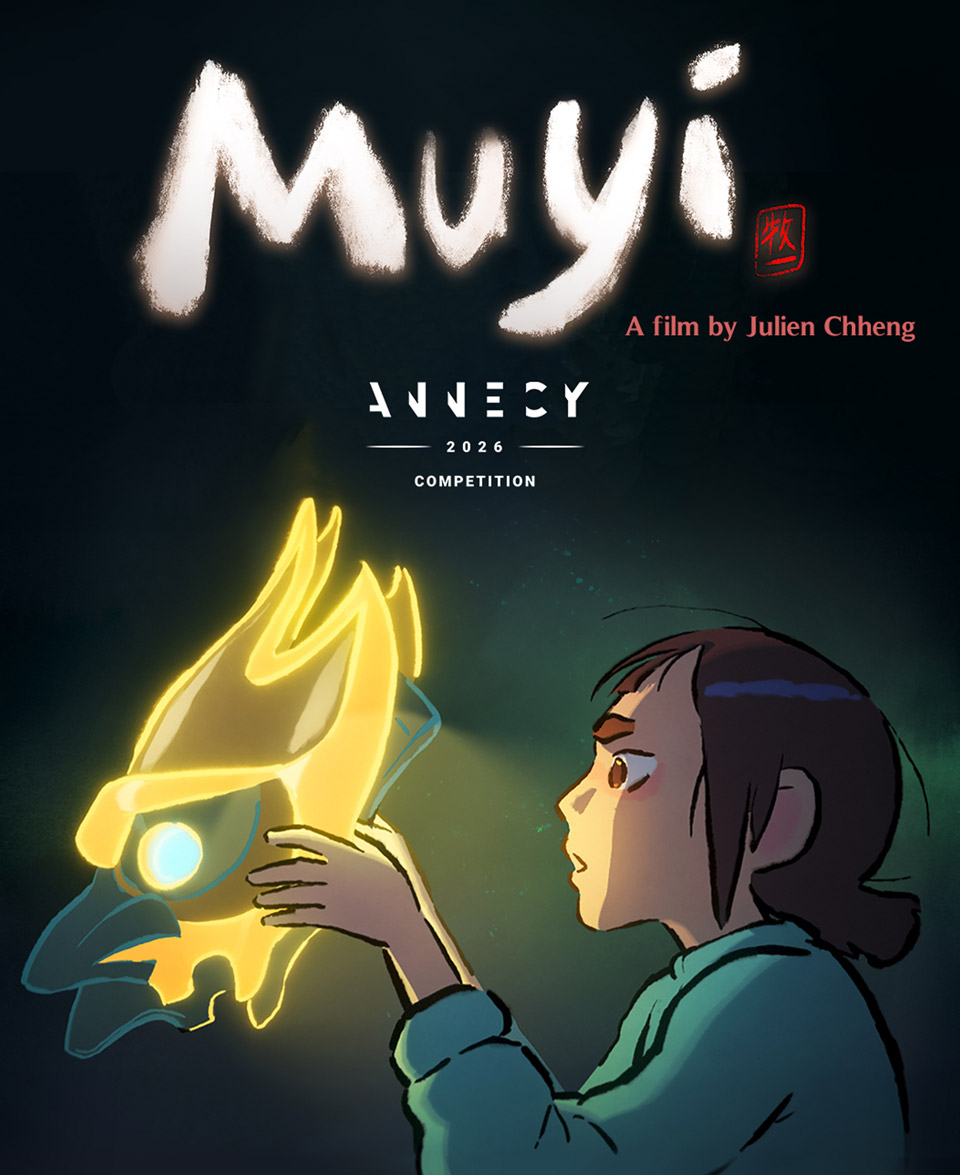
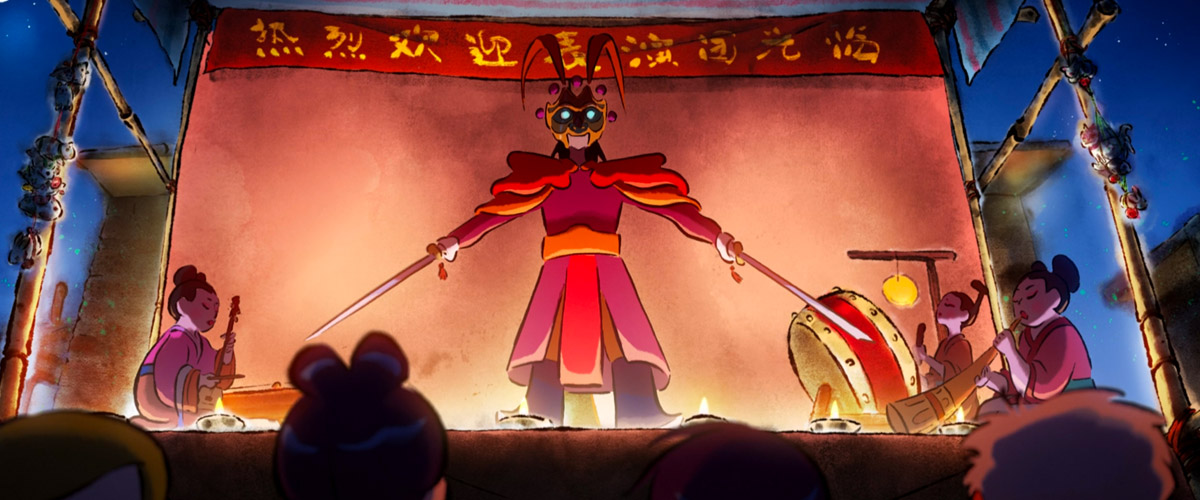
Muyi, 14, lives on a Chinese secluded mountain, forbidden to men. With her two friends, she encounters an opera troupe renowned for The Handsome General play. As she invites them to perform in her village, an angry Spirit awakens. To restore balance, Muyi embarks on a life-changing journey through old China, uncovering the secrets of love, courage and self-made destiny.
Film credits
Director, Graphic Author, and Main Producer: Julien Chheng (Studio La Cachette, France)
Screenwriters: Julien Chheng and Sujuan Xu
Co-producer: Chorok Mouaddib (Duetto, France)
Production: Oussama Bouacheria (Studio La Cachette, France) and Ulysse Malassagne (Studio La Cachette, France)
Music: Amin Goudarzi
Running time: 1h 30 min
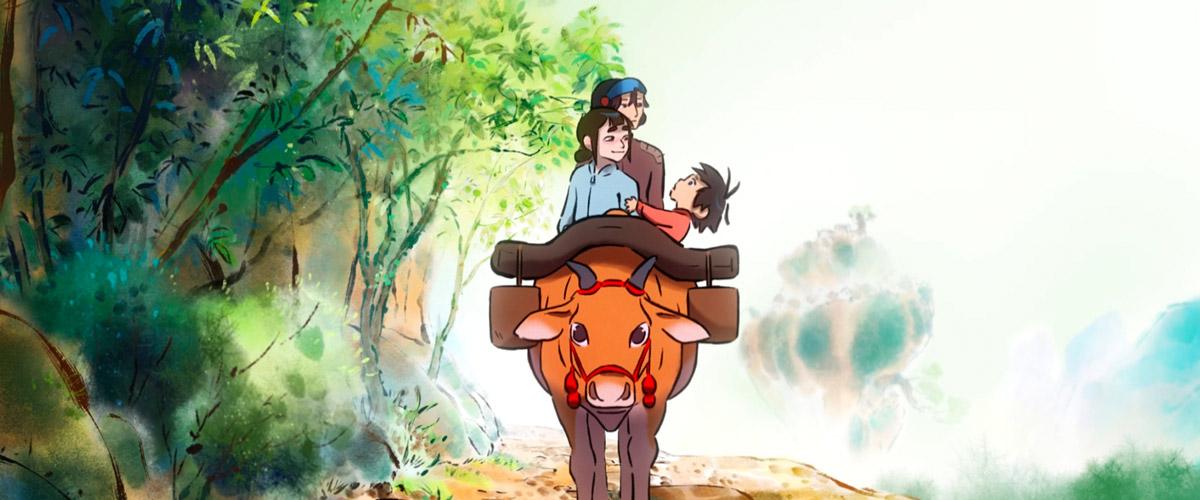
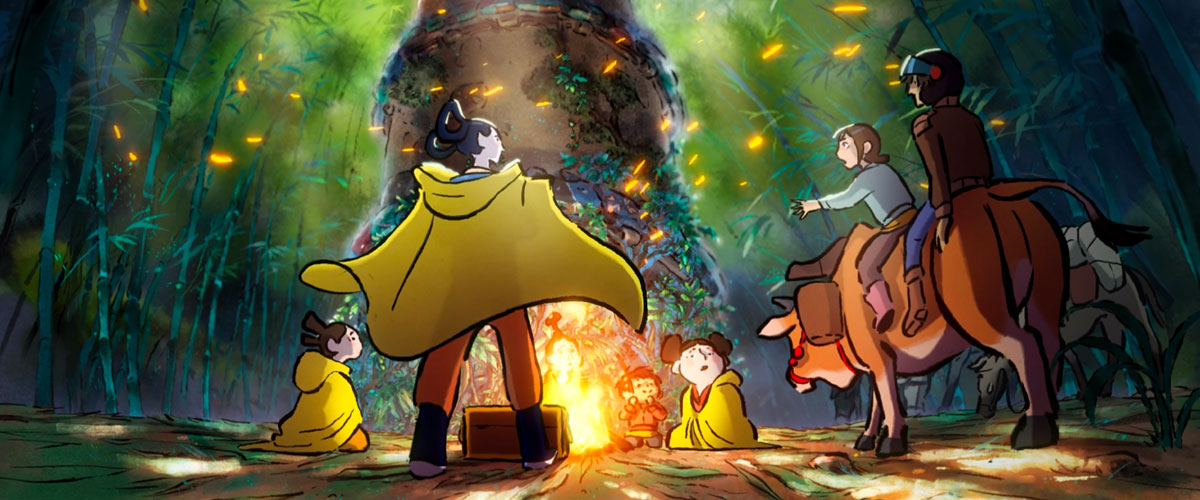
Muyi, la légende du village des femmes is a fantasy action-adventure feature film centring on an active heroine, Muyi, which is delicately, lovingly, and dynamically depicted through fascinating hand-drawn 2D animation. The film tells the magnificent life adventure of Muyi, starting from her mysterious hometown village and extending to the ancient world of China, depicted with beautiful background art.
The film will be premiered in the contrechamp feature films competition at the Annecy International Animation Film Festival 2026. We interviewed Julien Chheng, the director of Muyi, la légende du village des femmes.
You can read our previous long interview with Julien at Cartoon Movie 2025 on Muyi, la légende du village des femmes, which we conducted while the film project was in development, here.
Interview with Julien Chheng
Hideki Nagaishi (HN): Are there any particular aspects of the film that you would especially like audiences to pay attention to while watching it?
Julien Chheng: I would love audiences to experience Muyi’s journey as if they were traveling somewhere real and fragile, by observing all the details we’ve put into the backgrounds and character animation, all drawn by hand, frame by frame! And also, to pay attention from beginning to end, because it all connects. I’m well aware it’s a lot to ask!
HN: I felt that the film’s visual style is a milestone of the aesthetic you have developed in your previous works. The brush style, character design, story world, and colour palette all beautifully support the narrative and strongly highlight the film’s unique identity.
Could you elaborate on how you arrived at this aesthetic, both artistically and technically, over the course of your creative journey? What challenges did you face during the process, and how did you overcome them?
Julien Chheng: I think I’ve always pursued a certain idea, from Ernest and Celestine to the Star Wars: Visions short I directed, and through all of our past projects at Studio La Cachette: to fully embrace and show on screen the artistry of the handmade 2D animation we love so much, with great care and respect for the audience.
In that sense, I’ve always pushed for more grittiness in the characters’ linework, more complexity in the actions, and richer colouring in our backgrounds—up to a point that remains accessible to everyone to watch while still supporting the story. Sometimes, on past projects, it could be challenging to go too far down this more “auteur” route. But I really like it when I can tell that every image in the film is human-made, especially in the times we live in.
Somehow, working on Muyi, which pays tribute to calligraphy and Chinese painting while telling a story grounded in reality with a fantastical twist, felt like creating my own license to push further the boundaries of our visual style—and, story-wise, to dare to go deeper and more personal, to take greater risks.
This film is my love letter to the craft I live for, and that I want to see thriving in the future.
HN: This film integrates multiple narrative layers from different time periods and settings into a single cohesive story. It weaves together the inner conflicts and personal growth of several key characters with their past secrets and interconnected relationships. It enables the audience to follow the plot without confusion and arrive at a satisfying understanding by the end, all within a 90-minute.
Could you please let us know the approach to story development that enabled you to achieve this? What aspects did you focus on or pay particular attention to during the process?
Julien Chheng: It was indeed at the centre of my attention throughout the entire making of the film. As much as I wanted the visual style to remain welcoming to the audience, I also wanted the story to develop naturally and to gradually draw the audience into increasingly complex conflicts and intertwined narratives, all with a sense of clarity.
On both the artistic and storytelling aspects, I spent a great deal of time fine-tuning this balance throughout the process, dedicating much of my work to editing with the music, designing the worlds, and choreographing the action.
We go through a wide range of emotions in the film—many landscapes and many narrative developments—so I worked hard to assemble the pieces of Muyi’s journey and pace it with a progressive rhythm, in the most generous, real, impactful, and unpredictable way possible.
HN: Feature-length animated films are often difficult to realise, particularly when they are original stories rather than adaptations of established hit titles.
Could you please share your journey towards completing this film project, including the business challenges you had to navigate and overcome along the way? Additionally, what key insight or lesson would you offer to filmmakers attempting an original animated feature project?
Julien Chheng: It was such a crazy journey to produce the film! I started with versions of the script that potential financial partners would connect with, but they would have a hard time committing financially and officially to it.
We gained the trust of our partners based on visual development and storyboards quite early in the process, but we got them fully on board when we secured grants from French subsidies such as the Advance on Receipts from the CNC, etc. I feel grateful for the support we received from the CNC and the South Region, because they support originality and creative risk, and it really opens the road for private financiers to join in.
But I learned that being an Emmy Award-winning studio, and having already directed a feature film and a Star Wars short film, is, sure, a guarantee of quality and delivery, but not enough to convince major TV channels to invest in such a project.
So, in the end, I had to complete the budget through a higher financial involvement from our entities, Studio La Cachette and Duetto, in order to move into production.
We managed to deliver the film within one year of production, from layout to post-production, which is rather fast, and within a budget of 3 million euros, which is unprecedented in France with this kind of result. Of course, it drained a lot of energy on my part to achieve the film within these parameters, but I am now rested, and I feel very proud of our team and what we accomplished.
So, I would suggest any filmmaker willing to produce an original story never surrender, adapt the budget and time to help make the film a reality, and work hard to convince people you have a clear and interesting vision, because in the end everybody is taking the risk to commit to your project. Choose a good environment of people to surround yourself with, and stay true to the story you want to tell, because as much as securing a financial partner is not worth sacrificing your ideas, sometimes being flexible to some evolutions and changes can really elevate the story.
And above all, be ready to work hard, because you’re the one who started all of it, so you should also be in charge of ending it—for instance, by finishing the animation of the film on your own if necessary (of course, I ended up doing it…).