
“The Violinist”
Synopsis
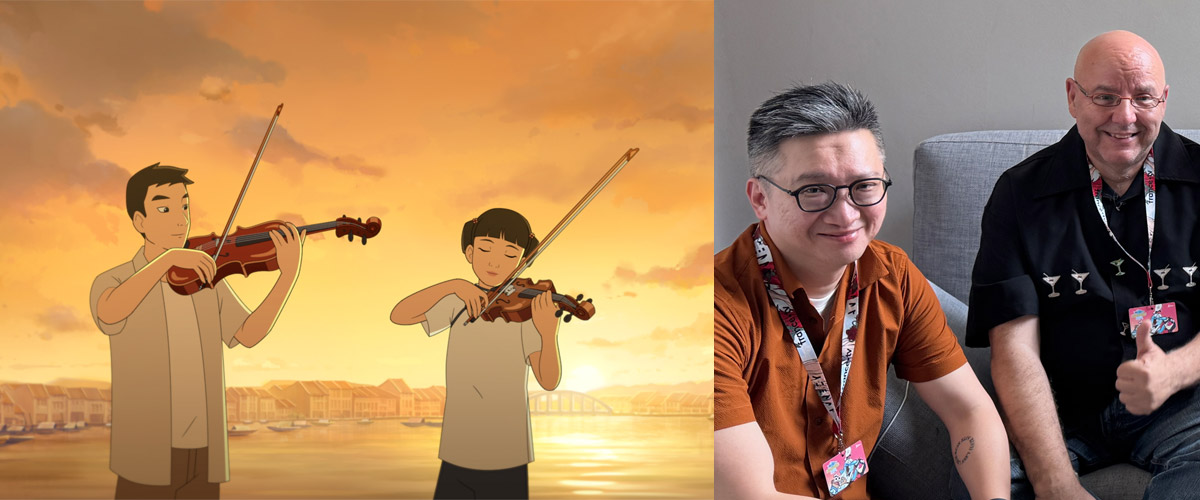
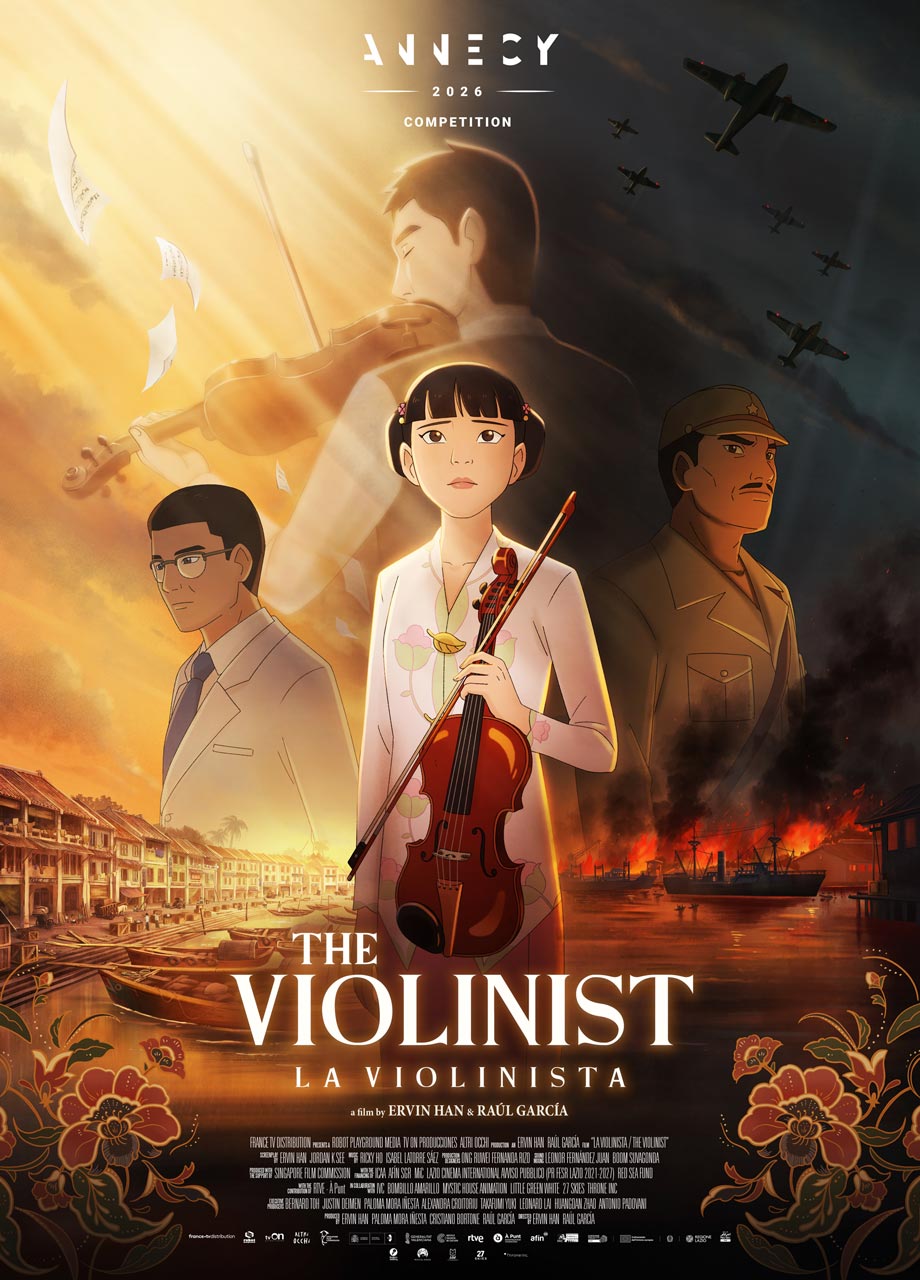
As a Spanish reporter uncovers the mystery behind an aging violin legend and her treasured instrument, a forgotten story of love, war and music emerges. In 1930s Singapore, childhood friends Fei and Kai are bound by music until war and the Japanese occupation tear them apart.
Film credits
Directors: Ervin Han and Raúl García
Authors: Ervin Han and Jordan Katherine See
Producers: Ervin Han (Robot Playground Media, Singapore), Paloma Mora (TV On Producciones, Spain), and Cristiano Bortone (Altri Occhi, Italy)
Executive Producers: Justin Deimen, Bernard Toh, Paloma Mora Iñesta, Alexandra Croritoriu, and Huangdan Zhao
Music: Ricky Ho and Isabel Latorre Saez
Running time: 1 h 54 min
The Violinist is a thoughtful and touching animated feature film directed by Ervin Han and Raúl García, which has been nominated for the official competition at the Annecy International Animation Film Festival 2026. It tells a moving story that weaves together the life dramas of several characters from different backgrounds in Singapore, connected through music during the era of the Japanese invasion, while exploring themes of love and justice as perceived by each of them.
The Violinist is an epic chronicle of two lives: Fei, a young violinist, and Kai, an orphan boy with an exceptional gift for the violin in Singapore, whose destinies are shaped during the era of the Japanese invasion. The film’s story was inspired by Ervin Han’s animated short The Violin (2015), a non-dialogue story spanning over 80 years of a violin in Singapore, rather than being a direct adaptation of the short.
We interviewed Ervin Han and Raúl García, the directors of The Violinist.
Interview with Ervin Han and Raúl García
Animationweek (AW): What message or experience do you want to deliver to audiences through the film? Are there any particular aspects of the film that you would like audiences to pay special attention to while watching it?
Ervin Han: I don’t think of the film as having a specific message. I am more interested in creating an emotional experience. The story takes place against major historical events, but ultimately it is about time, how people come into our lives, how history changes us, and what remains after people are gone.
If there is one thing I would encourage audiences to pay attention to, it is the music. In many films, music supports the story. In The Violinist, music is part of the story. There are moments where the characters express things through music that they cannot convey through words.
Raúl García: The Violinist explores the nature of memory and the ways in which war shapes human emotions. At its heart, it is a love story set against a historical period that changed the world forever. It is also a story about how music can help us overcome adversity, bring light into darkness, and preserve our humanity in times of turmoil. Above all, however, it is a story about human relationships.
AW: Where did the initial idea of developing a feature-length film inspired by your short film The Violin (2015) come from, and how did you decide to pursue it?
Ervin Han: When I co-founded Robot Playground Media in 2013, the dream was always to make an animated feature film one day. At the time, Singapore didn’t really have an animated feature industry, and in many ways we still do not. The last Singapore-produced animated feature, Tatsumi, was released in 2011.
I always felt that our first feature had to be a story that meant something to Singapore—a remembrance of our past and a reflection on who we are as a nation and how we got here. That was the original purpose of The Violin short film.
However, for a feature film, we needed more than a tribute. We needed a deeply human story with emotional stakes that could sustain a full-length narrative. The feature format allowed us to expand beyond a single moment in history and explore how war, memory, music and the passage of time shape an entire lifetime. That is when The Violinist began to evolve into something much larger and more creatively ambitious.
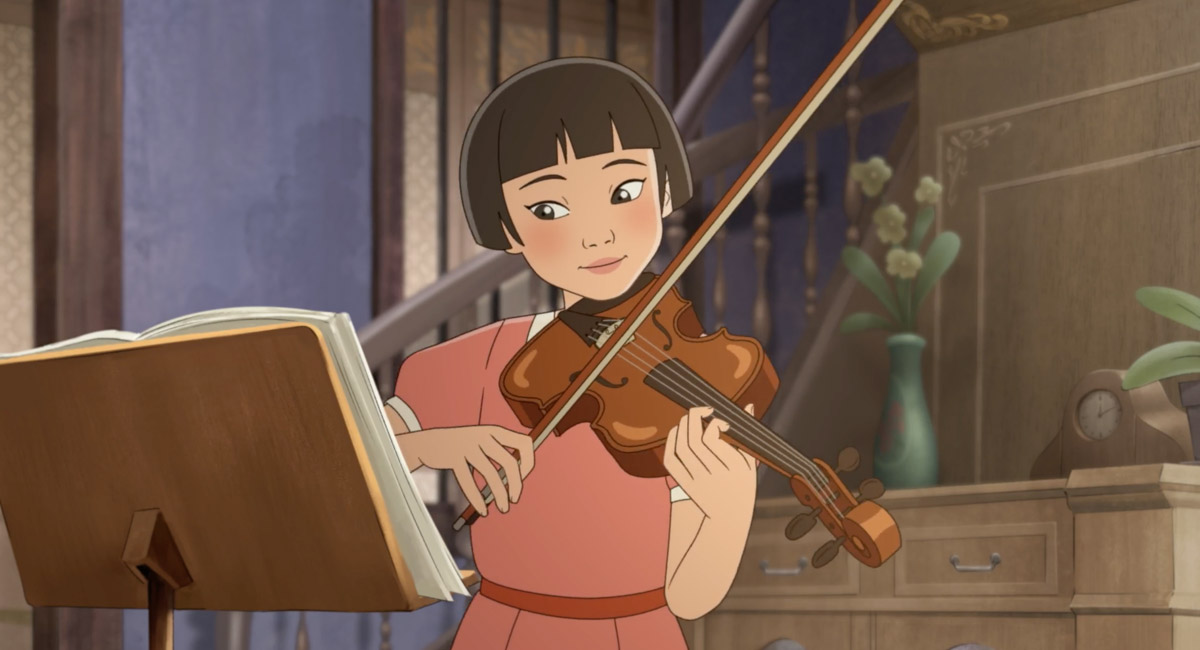
Raúl García: From the moment Ervin and I met, we knew we wanted to collaborate. What we didn’t know was when or how. Ervin had already built an impressive filmography, creating beautiful short films about places in Singapore that no longer exist. However, we felt that our collaboration needed a story with the emotional scope and narrative depth of a feature film—one that could resonate with audiences around the world.
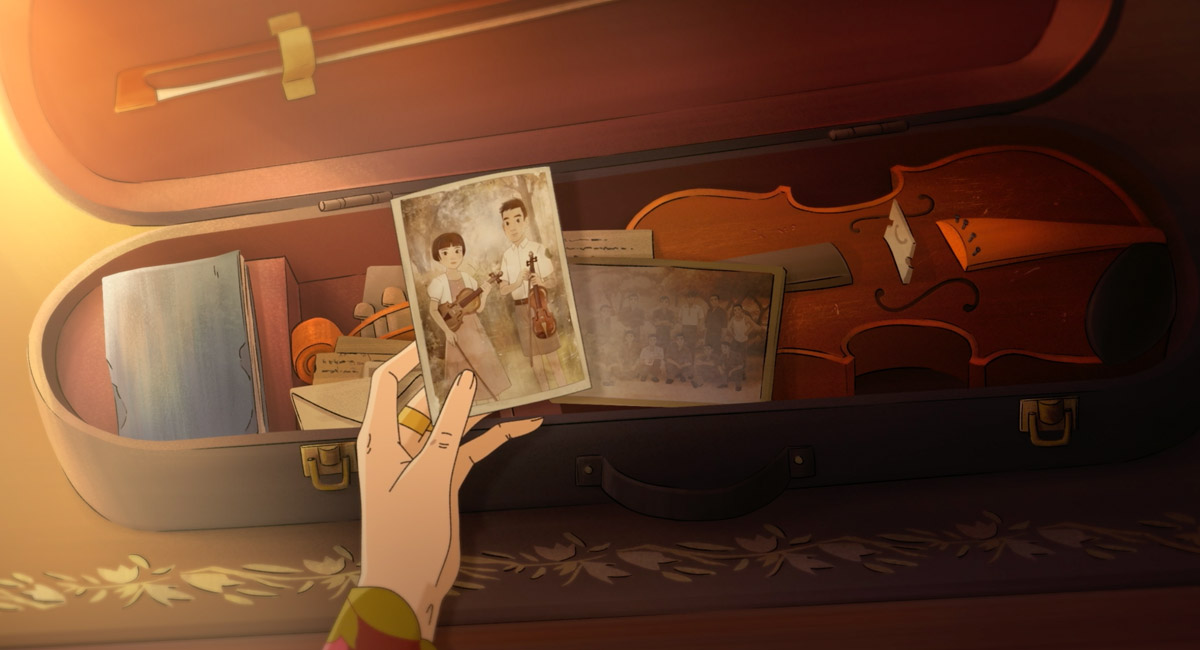
His short film The Violin already contained the seeds of such a story. Through music, it conveyed universal emotions and possessed the dramatic potential to be expanded into a larger narrative. It gave us the opportunity to develop new characters, explore deeper human relationships, and tell the story of star-crossed lovers whose lives are shaped by historical events beyond their control.
At the same time, I fell in love with Singapore’s culture, history, and the period in which the film is set. The project satisfied my curiosity and introduced me to a world I knew very little about, providing an additional motivation to bring The Violinist to life.
AW: How and at what stage of the project did Raúl García join as a co-director? Could you also tell us how the two of you collaborated as co-directors and how you divided your roles?
Ervin Han: Raúl joined during the early development of the feature film, after the script was mostly done, at a stage when we were looking to elevate the project artistically and internationally. Our young team in Singapore—all working on their first feature—also needed the experience and guidance that Raúl brought.
Our collaboration worked because we approached the film from different perspectives. I brought the cultural and historical context and guided the narrative and structure, having lived with the story and characters for many years. Raúl brought his decades of experience in visual storytelling and character-driven animation.
We discussed virtually every major creative decision together, but naturally gravitated towards different strengths. It never felt like dividing the film into separate pieces. It felt more like two filmmakers constantly challenging and refining each other’s ideas in service of the same story.
Raúl García: I first came to Singapore to teach animation at LASALLE College of the Arts. Through Chris Shaw, Head of the Film and Animation Department—and a former member of my animation team in London during the production of An American Tail: Fievel Goes West—I met Ervin. When we decided to join forces, we quickly realised that our skills complemented each other perfectly.
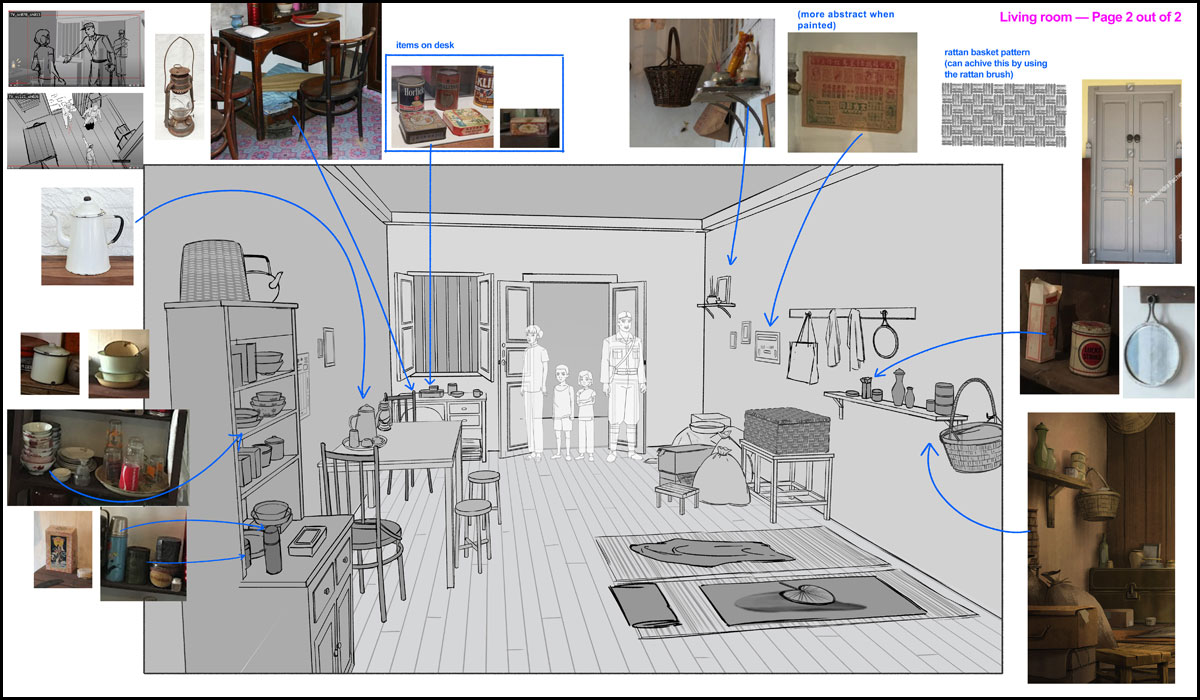
Beyond the technical challenges of producing a feature film of this scale, we found a creative balance between Ervin’s passion for historical accuracy and attention to detail, and my focus on character development, believable acting, and emotional authenticity. Our shared love of music also strengthened our collaboration. We spent countless hours selecting violin pieces from the classical repertoire and ensuring that every musical performance in the film felt authentic.
Our discussions ranged from the historical accuracy of a teacup’s design to the correct fingering for Massenet’s Méditation. Every detail mattered.
AW: In terms of the screenplay, characters, and dramatic structure of The Violinist, in particular, which elements from the short film The Violin did you retain, and what new elements did you create specifically for The Violinist in order to expand it into a feature-length story?
Ervin Han: It is actually very different from the short film. The Violin was a 15-minute silent film told entirely through music and imagery, whereas The Violinist is a much more expansive narrative, with dialogue, a larger cast of characters, and a far broader emotional and historical scope.
What they share is the same thematic DNA. Both are concerned with memory, time, and the way people carry the past with them. There are also a few moments in the feature that pay homage to the short through certain shots, compositions, and visual motifs, but these emerged quite naturally rather than by design.
Ultimately, I see The Violinist as its own work. The short was the seed, but the feature developed into its own story, its own characters, and its own emotional journey.
Raúl García: The Violinist is an epic story spanning eight decades, yet at its core it remains an intimate tale unfolding against a world in turmoil. We stayed true to the spirit of the original short film, keeping music as the emotional and spiritual heart of the story—the force that connects all the characters. At the same time, we expanded the scope through new characters, richer relationships, and narrative threads that gradually build towards an emotionally satisfying conclusion.
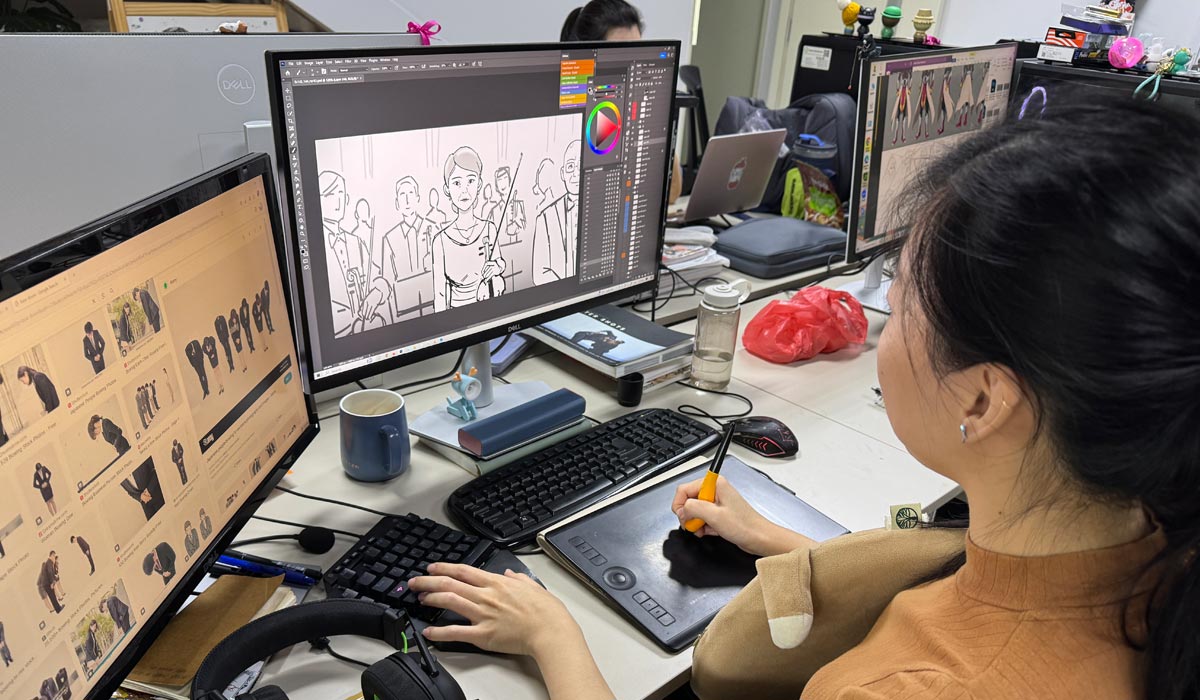
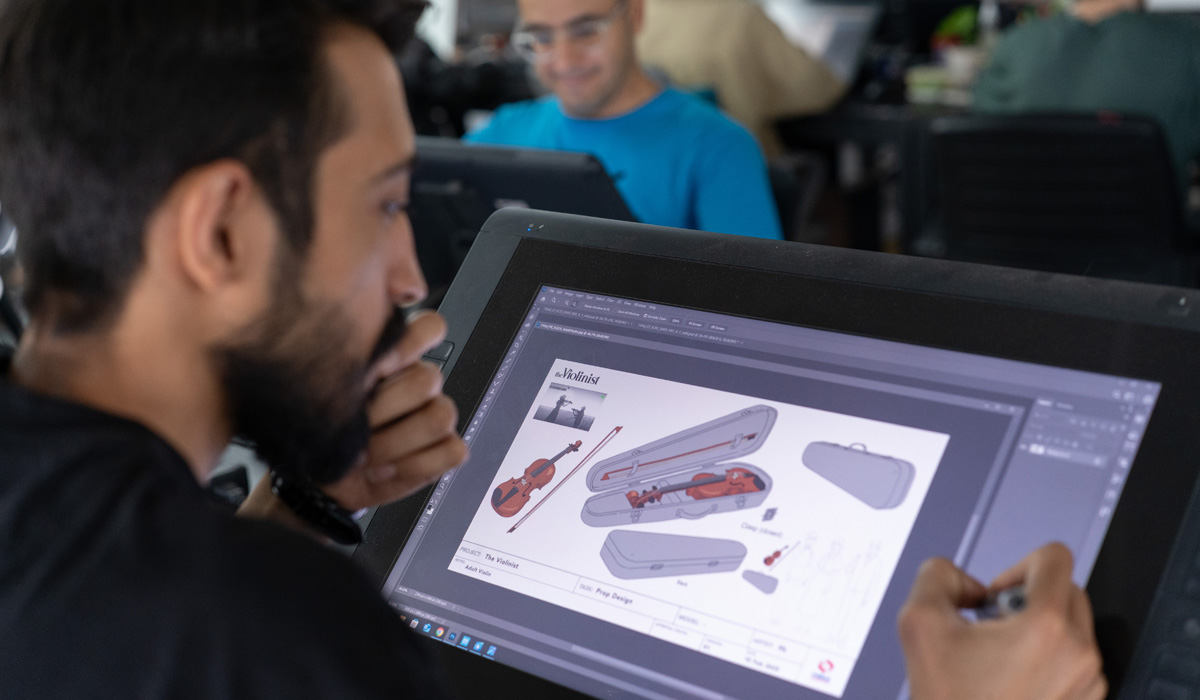
AW: What was your intention in portraying a soldier who, despite being part of a brutal invading force, retains his humanity and, through music, builds a relationship of trust with and supports Fei? Could you also share what you paid particular attention to when incorporating this element naturally into the overall narrative?
Ervin Han: One of the challenges of telling stories set during war is avoiding reducing people to symbols. History is often discussed in terms of nations, armies, and ideologies, but individuals are usually far more complicated than that.
We wanted to acknowledge the brutality of the occupation without losing sight of the fact that music allows Fei to encounter another human being rather than simply an enemy. For the soldier, it isn’t so much a question of kindness. He remains a loyal soldier, willing to fight and kill for his country. But he is also a man far from home, separated from his family, and longing for the war to end.
One of the tragedies of war is that people on all sides become trapped by forces much larger than themselves, and many never make it home. In that sense, the film isn’t only about the suffering caused by war, but also about its futility.
The relationship isn’t about excusing history or diminishing suffering. It’s about recognising that humanity and compassion can sometimes survive even in the darkest circumstances. I think that complexity makes the story more truthful rather than less.
Raúl García: War is often viewed as an anonymous force, but the people who fight, suffer, and die in wars are real human beings. They have dreams, fears, hopes, and relationships that are often sacrificed in the struggle to survive. That human dimension is what makes the story compelling. We wanted to portray ordinary people confronted with extraordinary circumstances and explore how they preserve their humanity when surrounded by inhumanity.
What began as a film rooted in a specific historical context ultimately became a story that resonates more strongly today than we ever imagined.
AW: What aspects were especially challenging for you when developing the film’s story, and how did you address or overcome them?
Ervin Han: One of the earliest challenges was narrative structure. The story follows two protagonists whose lives become separated for much of the film, so we needed a way to maintain an emotional connection between them across time and distance. Music ended up doing much of that work, particularly the central sonata that becomes a thread running through the entire story.
We were also telling a story that spans nearly eighty years of history, but we never wanted the film to feel like a history lesson. There was always the temptation to add more context, more events, and more explanation. But audiences connect with people, not timelines, so we constantly challenged ourselves to view history through the emotional experiences of the characters.
The film also doesn’t follow a conventional three-act structure with a single problem to solve and a final resolution. It’s closer to a life story shaped by memory and time. We had to trust that the emotional journey would be enough, and that audiences would stay with the characters rather than wait for the plot to deliver answers. In the end, that felt more truthful to the story we wanted to tell.
Raúl García: Memory is the key element that holds the film together. The story is told largely through Fei’s perspective, blending her own memories with her reconstruction of Kai’s life, pieced together like a puzzle over many years. Her understanding of how the world changed—and how those changes shaped her life—becomes the framework through which the audience experiences the story.
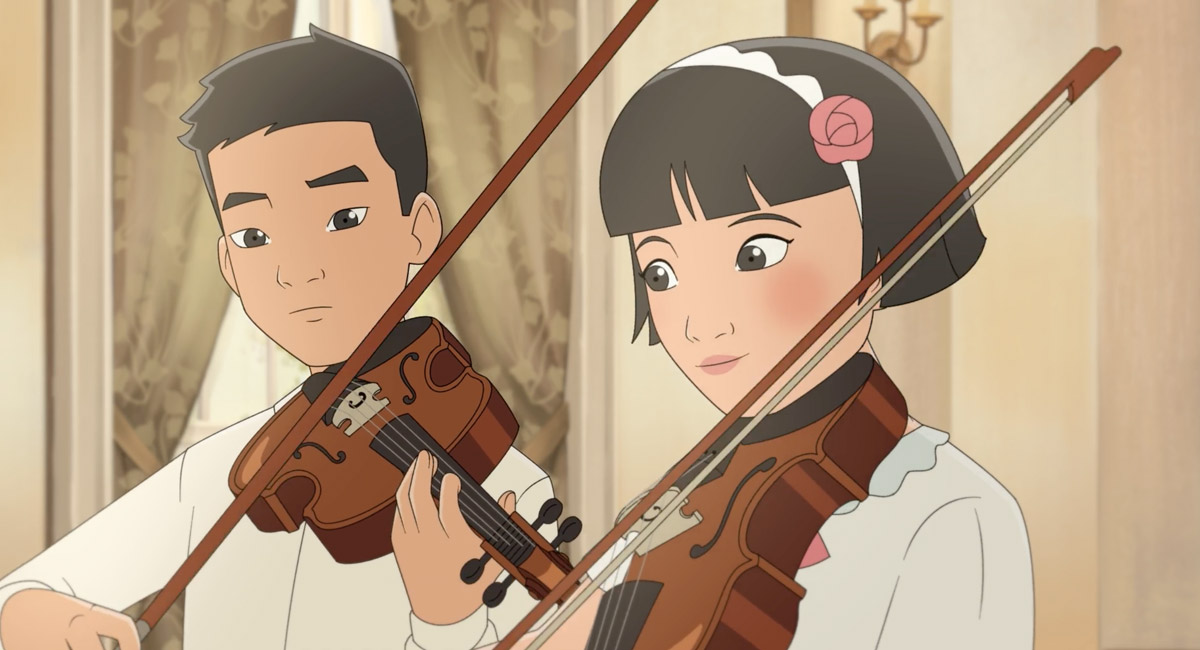
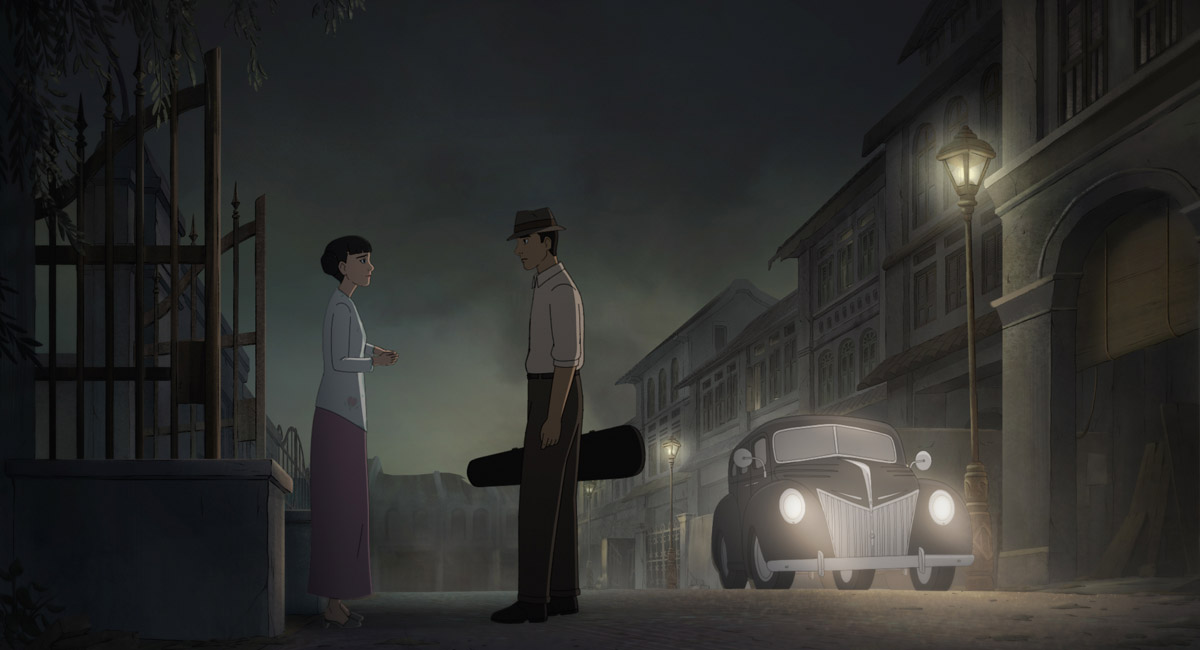
AW: Music is central to the film and serves as a core element of the narrative. How did you conceptualise the role of music, and how did you collaborate with Ricky Ho and Isabel Latorre Saez to shape its expression throughout the film?
Ervin Han: From the beginning, we knew music could not simply accompany the film. It had to function as a narrative language—almost a character in the story.
The relationship between Fei and Kai is built through music. Their emotions, aspirations, and memories are often communicated through performance rather than dialogue.
Ricky Ho and Isabel Latorre Saez were involved in conversations that went far beyond composing cues. We spent a great deal of time discussing character, theme, and emotional intention. The music transitions between diegetic and non-diegetic spaces, and that was important as part of the narrative language—to give the feeling that music gives oxygen to the story.
In many ways, they were storytellers as much as composers. The score doesn’t sit on top of the film; it’s woven into the DNA of the narrative itself.
Raúl García: Beyond being directors and animators, we are passionate film lovers with a deep respect for the cinematic classics that shaped us. Film music, in particular, has had a profound influence on our development as filmmakers. From the beginning, we knew that music would be part of the film’s DNA.
We wanted a classical approach to the score—not only in the sense of using a symphonic orchestra to support the drama and emotions of the story, but also by creating what we often called “the music within the music.”
The unfinished composition known as the Sunset Sonata becomes the central thread of Fei’s journey. It evolves into the film’s leitmotif, representing the relationship between Kai and Fei and ultimately culminating in the emotional centerpiece of the finale. Composer Ricky Ho carefully develops this theme throughout the film, building towards its final expression. I often thought about the musical payoff at the end of Mr. Holland’s Opus while shaping this aspect of the story.
At the same time, we needed soundscapes capable of conveying the brutality and emotional weight of war, as well as supporting the action sequences involving our characters—something Isabel accomplished brilliantly.
A third layer of the soundtrack comes from the classical pieces performed by Kai and Fei themselves. These works not only showcase their extraordinary talent but also pay tribute to the music that inspired us personally. In all honesty, many of them are among our favourite violin pieces.
AW: I would like to ask about the business side of the project. What challenges did you face before securing the greenlight, and how did you overcome them? Was there a particular turning point when you became confident that the film would be realised?
Ervin Han: Animated features are difficult to finance anywhere in the world, and doubly so when you’re trying to make an original historical drama rather than a franchise or family comedy.
There wasn’t a single moment when I suddenly felt confident. In fact, there were several moments when the project could easily have fallen apart.
What ultimately got the film made was the gradual accumulation of people who believed in it—artists, producers, financiers, broadcasters, and partners across multiple countries.
Looking back, I think the real turning point was when the project stopped belonging only to me and started becoming something that many people wanted to see exist. That’s when it became resilient enough to survive the inevitable setbacks of a long production.
Raúl García: Making an independent animated feature is an act of passion and perseverance. It is a constant balancing act. Believing in a project as its creator is one thing; convincing others to share that belief is something entirely different. Bringing together more than 300 artists around a common vision requires determination, trust, and a great deal of patience.
Without the backing of a major studio, and having originated the project in Singapore—a relatively small market for animated features—it was clear from the beginning that a film of this scale would require international partners. Establishing a Singapore–Spain co-production structure became the first essential step towards securing financing and moving the project forward.
With the support of TV ON Producciones in Valencia, we were able to build a co-production framework that combined Singaporean, Spanish, and European funding sources, blending public support with private investment. Gradually, we assembled a strong creative and production team. Altri Occhi in Italy joined as the third official co-producer, and over time, additional studios and investors from around the world came on board.
What began as a small independent film eventually grew into a truly international collaboration, bringing together talented artists and studios from countries including Colombia, through Bombillo Amarillo; Canada, through Mystic House; and Japan, through Throne Inc., among many others.
In many ways, the making of The Violinist mirrors the story it tells: people from different backgrounds coming together, overcoming obstacles, and creating something meaningful through passion, perseverance, and a shared belief in the power of art and music.