
Dog and I
Synopsis
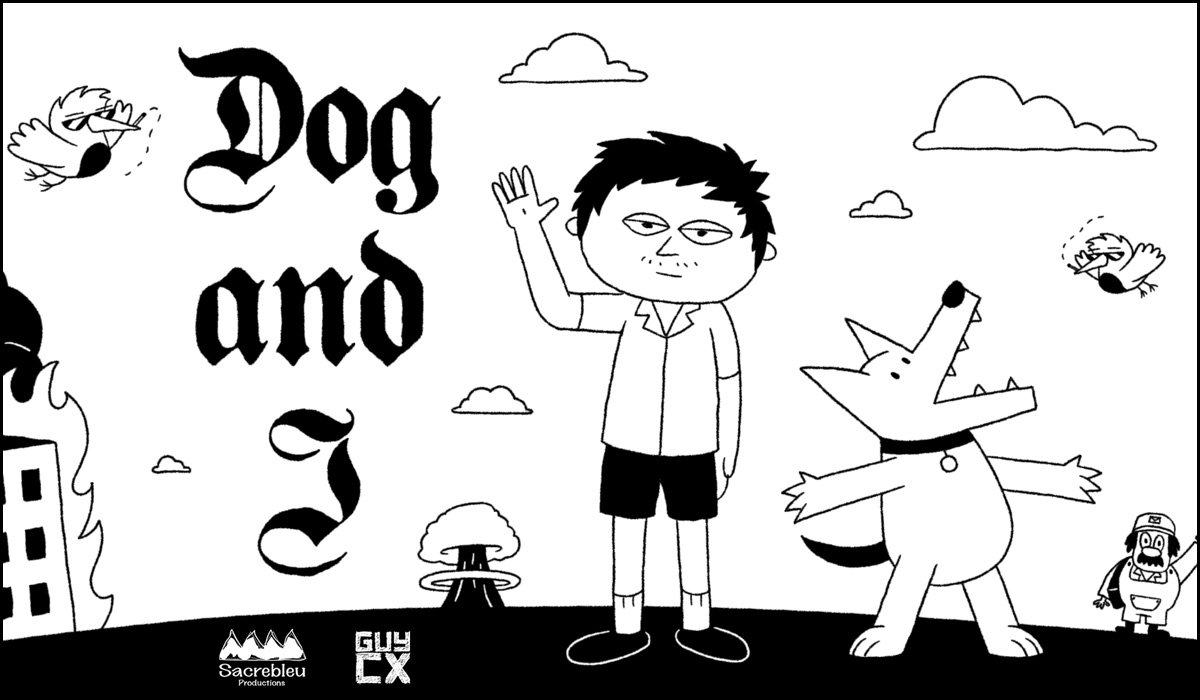
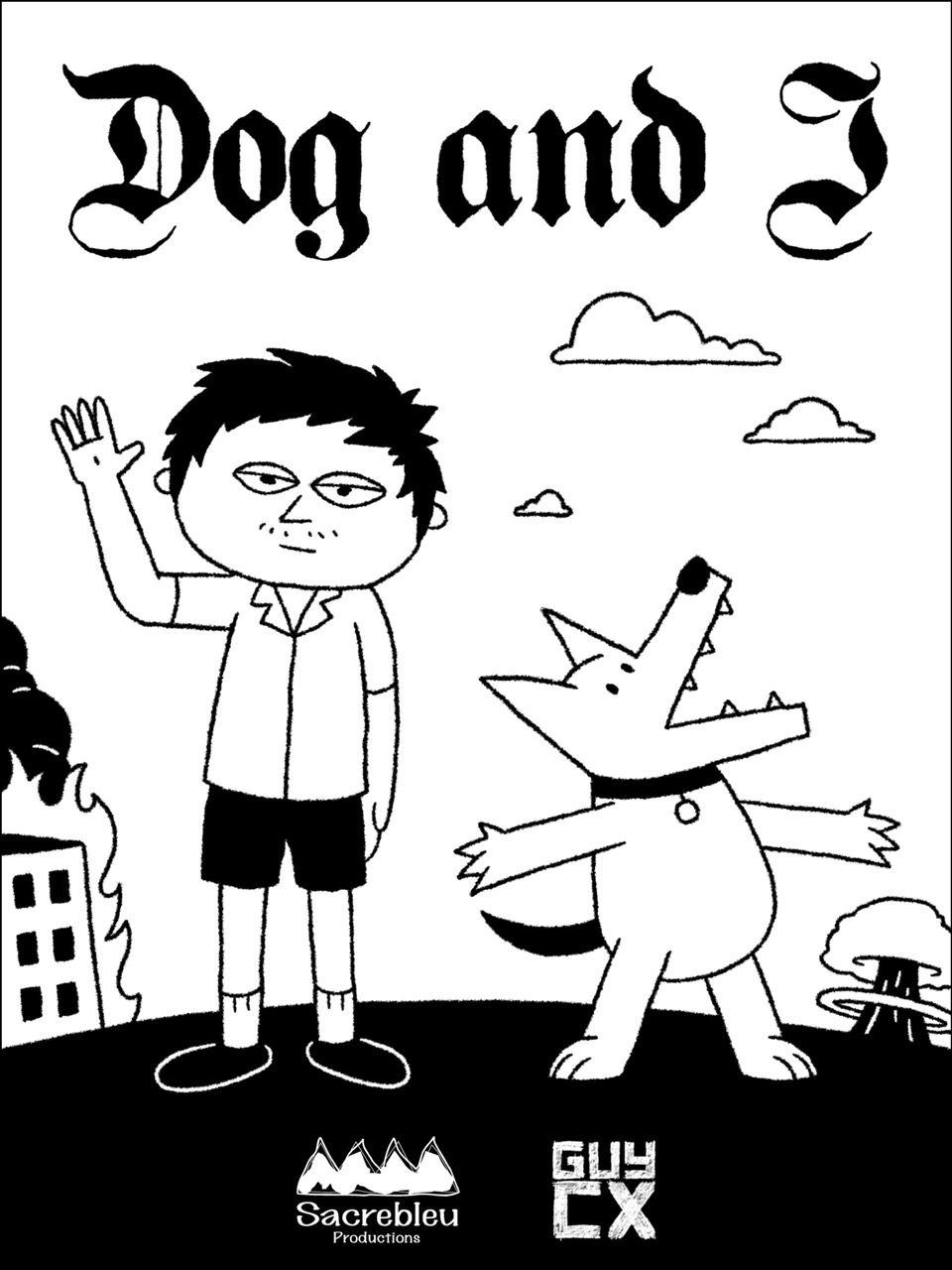
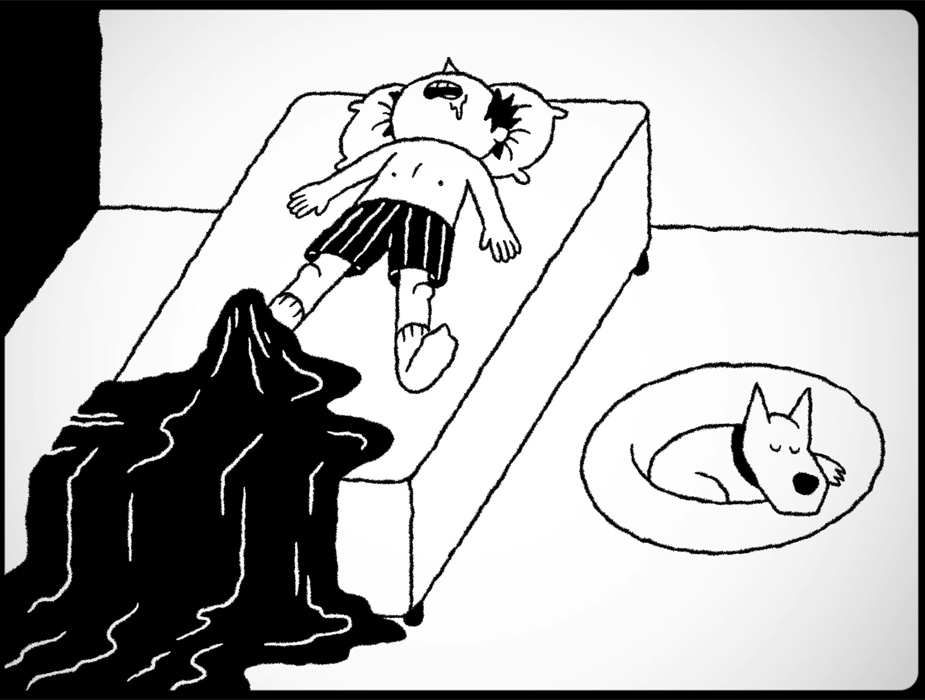
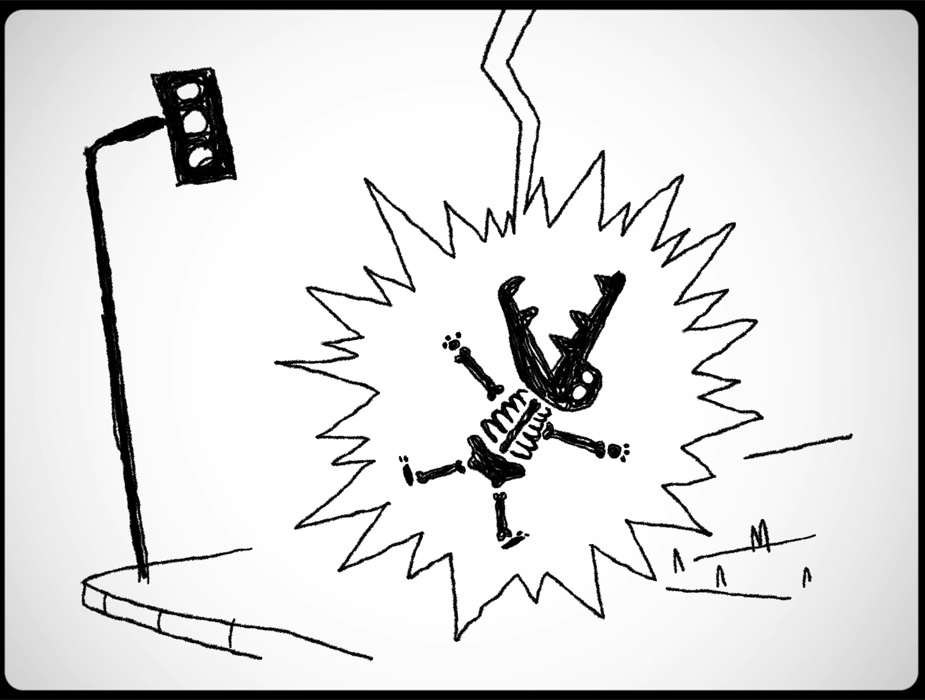
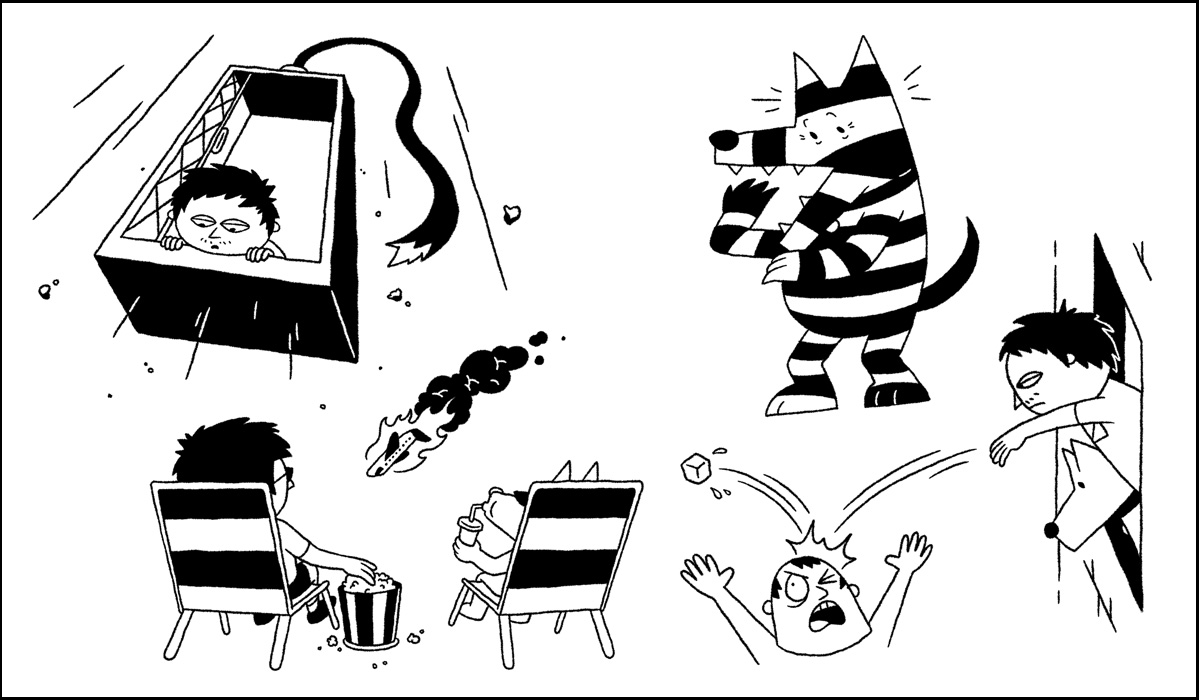
“Dog and I” showcases the everyday life of a young man and his dog living in a world where logic, reason and normality are completely meaningless words, where old ladies are smashed by war tanks falling from the sky, birds smoke cigarettes and dance, people are cut in half by flying ice swords for no good reason and, even more bizarre than any of that, dogs can talk. And sing. And buy furniture. Or at least this dog can.
Director and Graphic Authors: Guy Charnaux
Scriptwriters: Guy Charnaux and Rafael Sperling
Producer: Ron Dyens (Sacrebleu Productions, France)
Format: 20 X 3’
Target audience: Young Adults / Adults
Techniques: 2D digital
Dog and I is a new animated series project by Guy Charnaux, creator of acclaimed animated shorts including A Man Called Man (2015), Business Meeting (2018), and Nox Insomnia (2019). Following the short film Humans 5000 (2025), Guy has once again teamed up with the Oscar-winning Sacrebleu Productions (France) for this new series.
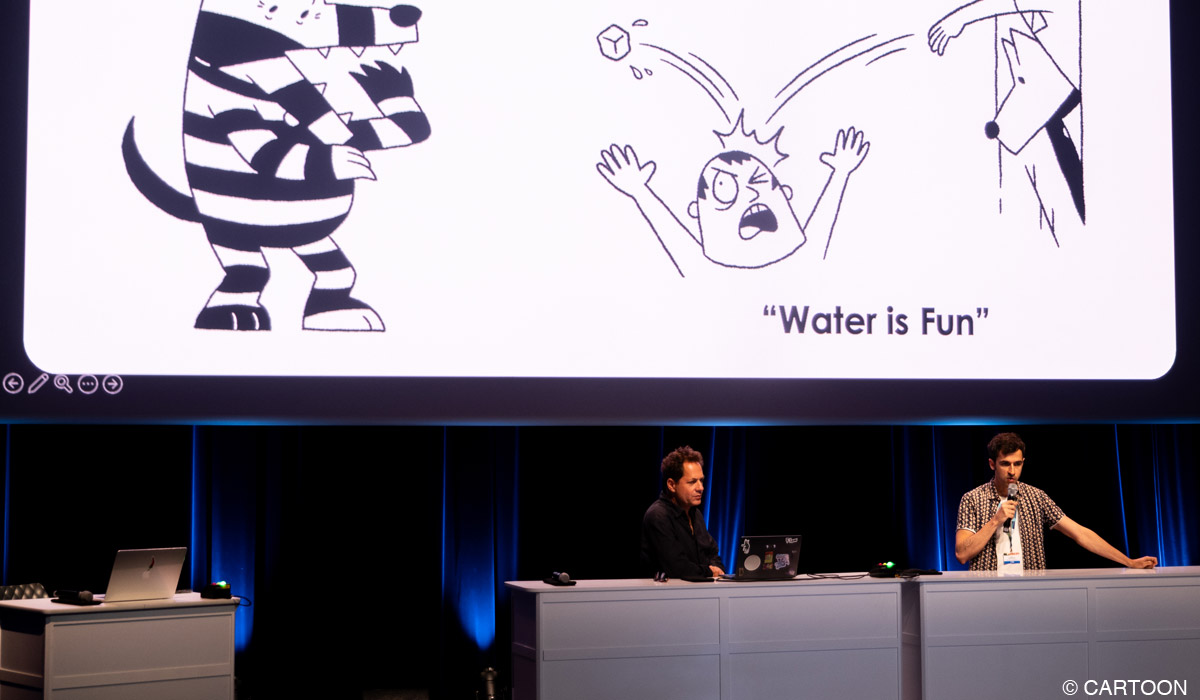
The project was pitched at Cartoon Forum 2026, where a completed episode was screened as a special preview. Filled with surreal and cynical humor, the episode received a very positive response and drew roars of laughter from industry professionals attending from across Europe.
We had the opportunity to interview Guy Charnaux about the story behind Dog and I.
Interview with Guy Charnaux
Hideki Nagaishi (HN): Could you briefly summarize the appeal of this animated series to the prospective audience and your particular favorite parts or elements as its creator, director, writer, and graphic author?
Guy Charnaux: I believe that Dog and I has the capability of being absurdist, story-driven, clever and funny while also being something that all sorts of people can appreciate, not only people who are very niche. I say this because absurdist humour, in my opinion, is seen as something very marginal, even in the animation industry where the possibilities of doing absurdist pieces are virtually infinite. I think this is a show that can be weird, unpredictable and pleasant simultaneously, and that that’s what’s most appealing about it.
One of my favorite elements of it, as its creator, is how experimental and peculiar the whole thing is, how many possibilities we have inside the show and the challenges that come with that. As its graphic author, it’s to be working in a style that’s very natural and pleasant for me to work with, applying a type of animation that, not only stylistically but also conceptually, is very appealing to me.
As a writer, it’s to be dealing once again with Rafael Sperling’s stories, transforming and adapting his amazing texts, but this time, not to make a short film, but an entire show.
HN: How did you come up with the original concept for the series? And how do you develop the initial ideas for individual episodes?
Guy Charnaux: For many years now, I’ve been collaborating with Rafael Sperling, a friend of mine who writes short stories and poems. Sperling has published a few books with his wild, unpredictable stories. His writing style, I like to say, is as if Bukowski and Chekhov had a baby who fell in a keg of ecstasy as soon as he was born.
To this day, I’ve adapted five of his stories into short films which have experienced quite a bit of success in the festival circuit (A Man Called Man, The Poet of Horrible Things, Business Meeting, Nox Insomnia, and Humans 5000). When Ron asked me if I had any ideas for a show, I talked to Sperling about it and he showed me these crazy stories that he had written about a man who lives with his dog, and that’s where it came from. These stories constituted the core of the first episode ideas that I developed for Dog and I, then other ideas and other unrelated Sperling stories were added to the mix as well.
HN: How do you think you developed that surreal and cynical sense of humor through the effective combination of dialogue and visual expression?
Guy Charnaux: I think it has a lot to do with two things. The first one is the contrast between the content of the stories and the way they are presented: the fact that the show is formed by these wild and absurd stories that are showcased with this deadpan style of acting and narration, with characters that have little or no expressiveness, makes for some really peculiar contradiction between form and subject, which can be quite humorous.
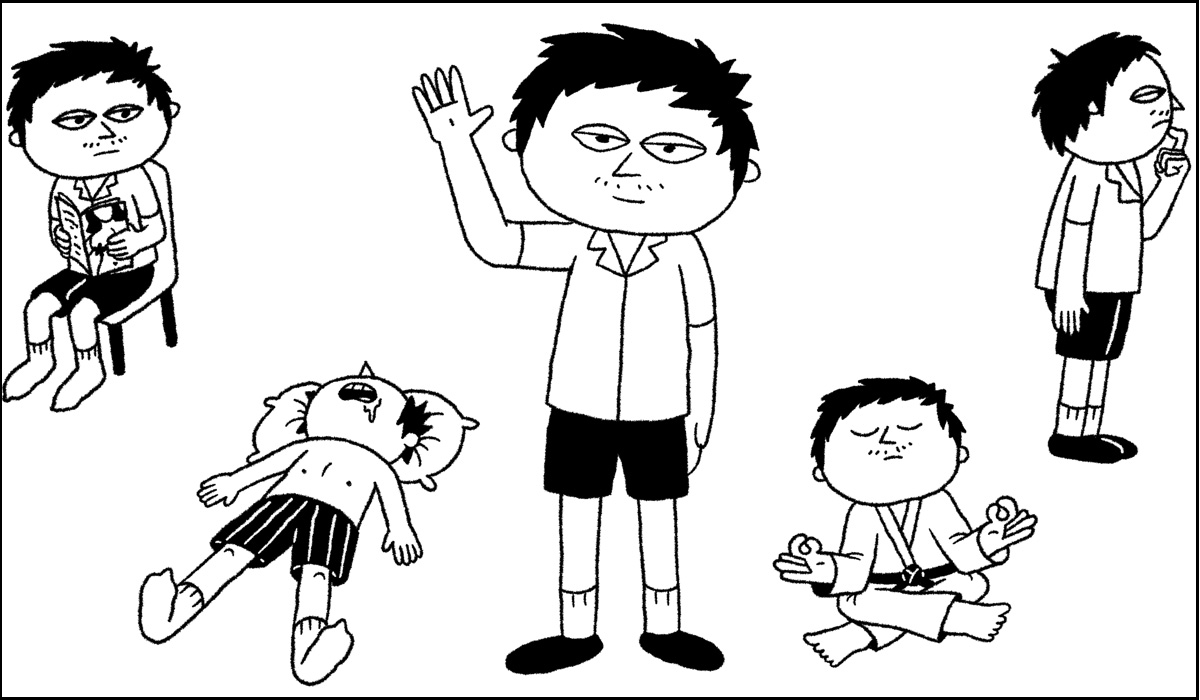
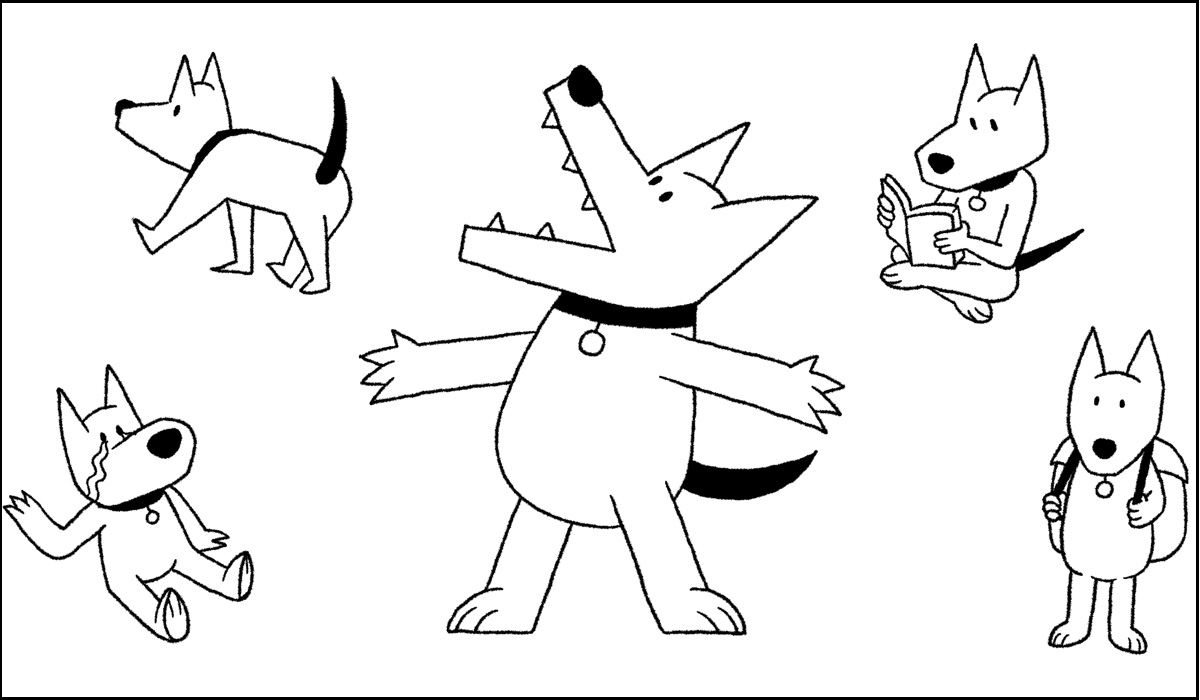
The second one has to do with the visuals themselves. When you present something that’s either quite violent or discomforting in any way, the more realistic your material is, the more people will be disturbed by it. By using a style that I’ve developed over the years, which is a very minimalist cartoon style, quite cheeky too, with very economic, not-at-all realistic animation, I can manage to present these often preposterous stories in a way that makes people laugh more than be appalled by them, hopefully. It has a lot to do with the proper usage of timing as well, for timing alone can make all the difference between a funny gag and a disturbing story.
HN: I feel that the simple visual design fits the overall tone of the project very well. What artistic considerations or visual direction led you to the final visual style of the series?
Guy Charnaux: Apart from what I’ve said on the previous question, more than anything else, it has to do with the explorations that I’ve been doing over the past 10-15 years, while I was making my short films. I’ve always enjoyed asking myself, “how can I make the funniest/most shocking/most remarkable film with the simplest drawing style and the least amount of animation pyrotechnics?” For what has always amazed me the most in the world of art and animation are not the virtuosos, but the geniuses who make brilliant pieces with very little: the Saul Steinbergs, the UPAs, the Joan Mirós, that sort of thing.
When it comes to artistic inspirations, this style that I’ve developed has a lot of influence from artists such as Don Hertzfeldt (my favourite independent animation filmmaker) and Greg Fiering (creator of Migraine Boy, a huge influence for this project), and from other limited animation shows too when it comes to the animation style, such as Home Moviesand South Park.
HN: What aspects of this animated series have been particularly exciting or challenging for you so far?
Guy Charnaux: Getting something that may sound very monotonous or repetitive at times and turning that into something interesting and funny, I guess that would be one of the challenges that I really enjoy on Dog and I. Humour has a lot to do with rhythm, and a solid work of rhythm and timing can make the entire difference between something repetitive being hilarious or monotonous.
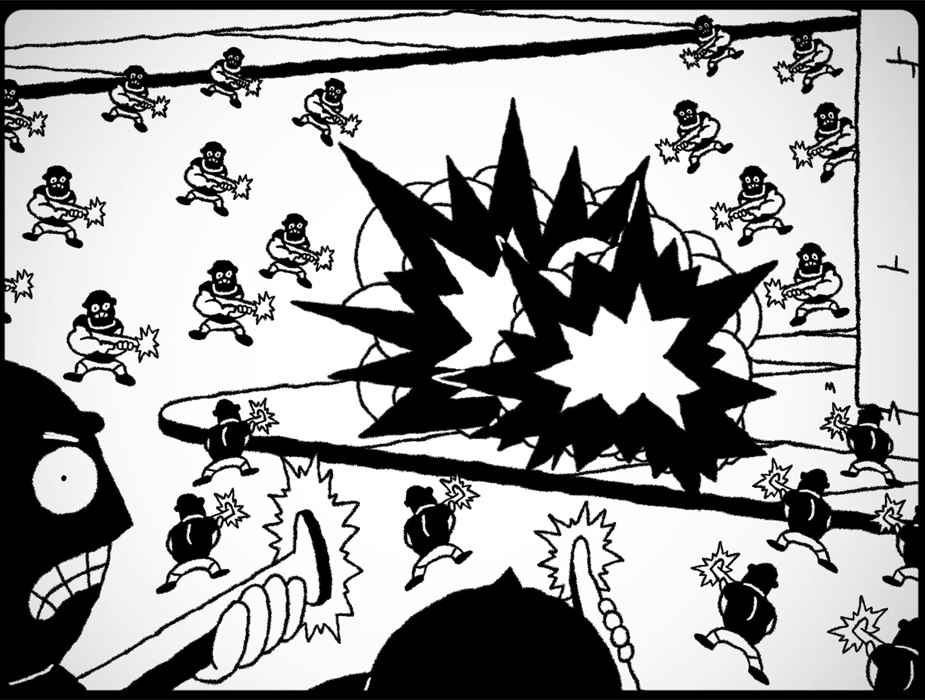
On the polar opposite of that, to get an idea that may seem impossible to imagine physically or realistically in any shape or form – for example, a bunch of cars exploding on a tank which is also exploding as they are being shot at by armed assassins – and visually present that in a way that is not only clear and understandable, but also original and amusing. It’s a great exercise for creativity.
HN: You continue to individually create witty animated shorts. Where does your passion for creating those works come from, and what aspects of the production process do you find particularly rewarding?
Guy Charnaux: I believe my passion for creating these projects comes from this amusement that I have when I see other animated films that, as I’ve said before, make so much with so little, and give the audiences a really good time through careful, clever filmmaking.
It also has to do with my overall passion for cartoons, of course, which I’ve had since I was a little kid, and for the pleasure that I get from externalizing, through animation, my own peculiar feelings or ideas or my difficulty to comprehend the world that we inhabit.
One of the aspects of the production process that I like the most is whenever I can turn a weak or uninspired scene/sequence of a show into one of the strongest scenes/sequences of it, it’s usually quite hard but extremely gratifying. Apart from that, the process of animation is always something that I really enjoy, it feels like some sort of meditation to me. Storyboarding is much harder though, maybe because I’ve been working as an animator in the industry for quite a long time now, but not as a storyboard artist, so that makes a difference. When I’m animating, I feel peaceful. That’s all!