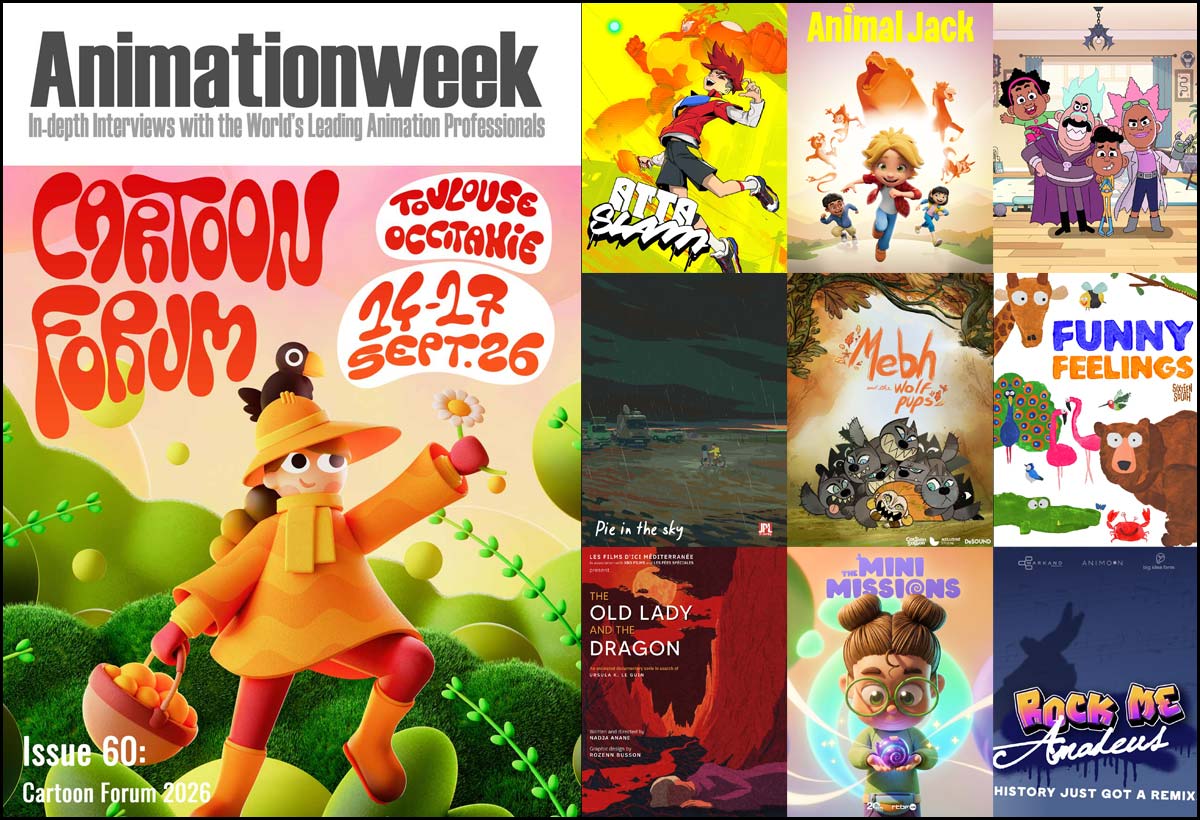

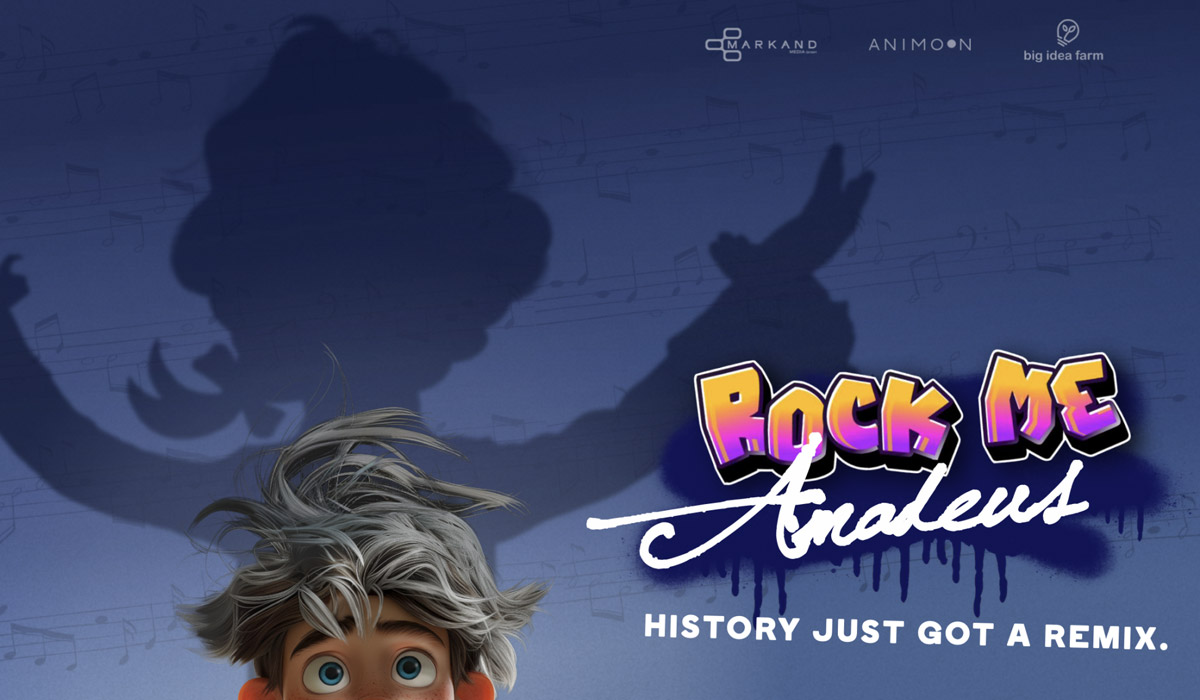
Rock Me Amadeus!
Synopsis
When a freak musical accident catapults 12-year-old Wolfgang Amadeus Mozart into a struggling high school music program in present-day Vienna, chaos hits the right note. Stuck in a world of Gen-Z misfits and a school that’s barely holding its orchestra together, Moz becomes the most unexpected teacher they could imagine. To send him back home, the students have to get classical training. What starts as a desperate plan quickly turns into something bigger: a group of overlooked teens finding their rhythm, their confidence, and each other. As Mozart pushes them to create music in ways they never thought possible, the real question becomes whether any of them still want him to leave.
Director and Author: Toni Weiss
Scriptwriters: Toni Weiss, Simon Nicholson, Katie Lee, Alex Milway, and Julia Waldner
Story Editor: Fernanda Camargo
Character Designer: Eda Kaban
Art Director: Johanna Grubmair
Initial 3D Modelling: Vasile Brovcenco
Producers: Lars Wagner (Big Idea Farm, Germany), Markus Andorfer (Markand Media, Austria), and Grzegorz Waclawek (Animoon, Poland)
Format: 26 X 22’
Target audience: Children 6-9
Techniques: 3D digital
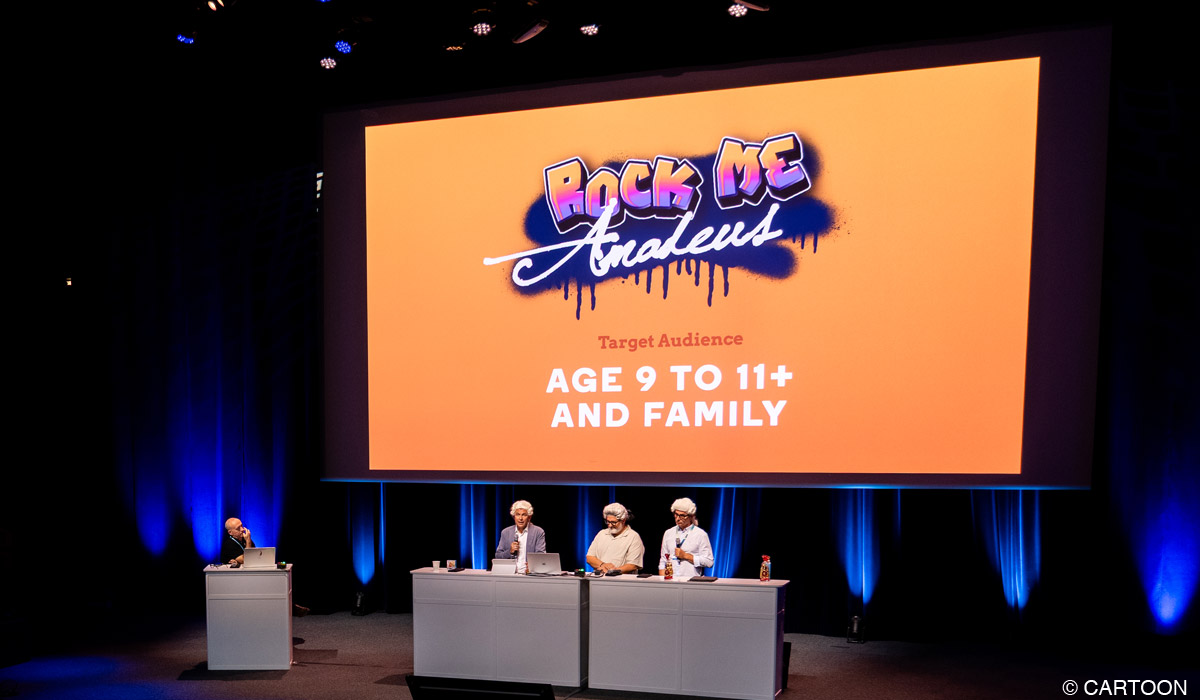
Rock Me Amadeus! is a 3D digital animated series, a fun, contemporary coming-of-age story centering on Wolfgang Amadeus Mozart, a universal icon in the world of music, both past and present, and into the future, who time-travels to the present day, targeting children aged 6-9 and around.
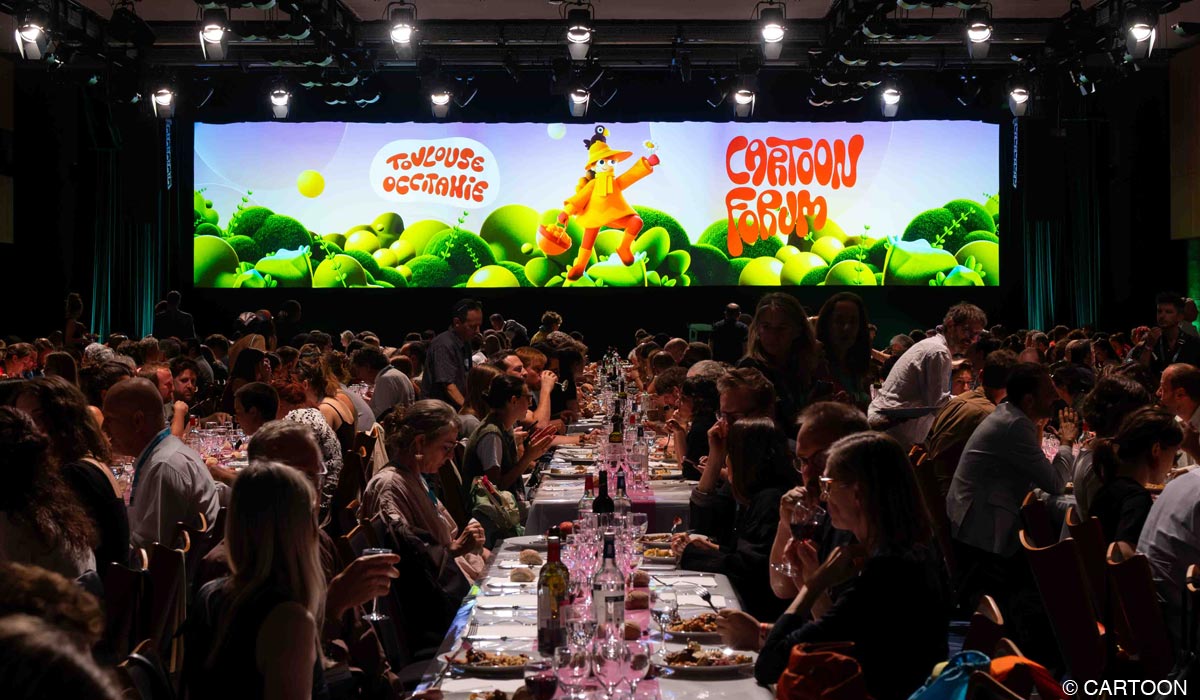
The project was selected and pitched in front of a large audience at Cartoon Forum 2026, uncovering a more detailed storyline and visuals of the main characters. We interviewed Toni Weiss, the director and author, and two producers, Lars Wagner and Markus Andorfer, about the story behind the project.
Interview with Toni Weiss, Lars Wagner, and Markus Andorfer
Hideki Nagaishi (HN): How did this project begin, and how did the international co-producers Markand Media (Austria) and Animoon (Poland) join?
Lars Wagner: It was a team effort from the very beginning. Markus and I have known each other for a long time—back when Markus was the founder and CEO of Nickelodeon Germany and I was heading Disney Germany. Grzegorz and I met on a previous production.
When I casually mentioned the idea of an animated series about Mozart, Markus was intrigued because his children in Vienna had been exposed to various programs introducing Mozart and classical music, which they often found rather boring.
And then Markus and Toni met and came back with this great idea, which immediately got me and Grzegorz excited. That was the very beginning of the project.
HN: As the main producer of the series, what do you think are the key aspects of this animation series that will appeal to its target audience?
Lars Wagner: As a team, we all complement each other very well with our respective strengths.
From a producer’s perspective, the key aspects of the series are, on the one hand, the truly global brand or IP and giving this global IP a new dimension—namely, not bringing children to Mozart, but bringing Mozart to today’s children.
Another point is the incredible franchise potential surrounding this brand. And yet another is the power of music as one of the building blocks of the IP.
HN: What messages or experiences would you most like to deliver to the audience through this animation series, and why?
Toni Weiss: Believing in yourself and your creativity is under a lot of pressure today. Kids are constantly asked to compare themselves with others, and a single discouraging remark can make a huge difference. Today, there is also AI, which can make pursuing something as demanding as learning an instrument seem old-fashioned or unnecessary.
But kids want and need to create. They need challenges, and they need those experiences in order to believe in themselves.
That’s what this show is about. Through creativity and music, we want kids to experience the joy of overcoming challenges, believing in themselves, and connecting with others.
Mozart has a lot to teach us about creativity, teamwork and human connection. For me, this has always been a show about belief and connection: to yourself, to others and to the mystery of life. Mozart knows this. He’ll just have to teach his friends.
Creativity, art and teamwork have been life-savers in my own life, and they remind me every day that there is still room for more connection and more beautiful art.
HN: What aspect of this series project has been especially exciting or challenging for you so far?
Toni Weiss: Breaking a season with a five-character ensemble is a challenge. We are a high-powered writing room, with very experienced staff writers. We are talking Disney and BBC veterans from the US, the UK and Germany. We are smaller than most US shows and need to move quite quickly.
Coming up with character challenges for the season and keeping the horizontal plotlines, Mozart’s time travel and whether he will ever make it back, and the development of the group as a band, interesting and believable is more challenging than a straightforward problem-of-the-week show.
And these characters keep surprising us. They are so rich. The mentor relationships between them constantly push us toward more interesting stories and real emotion.
HN: Where did the initial idea for the project come from?
Markus Andorfer: The initial idea was actually born because Lars, as the CMO for toy company Playmobil, produced a toy figurine of Mozart that was a huge success. The Foundation Mozarteum then used the Playmobil Mozart for social media content, which was generating the biggest reach for them. Then the Mozarteum realized they could reach a new audience for Mozart with this charming short-form content and wanted to do more, so Lars suggested developing an animated series.
Toni Weiss: From the beginning, I wasn’t interested in making a purely historical series about Mozart. Instead, I wanted modern children to meet Mozart where they are: in the 21st century.
So I pitched the idea of whisking 12-year-old Mozart out of the 18th century and into modern times. He would lose his fame and status, but finally have the chance to become a normal boy, while having to navigate social media, peer pressure and modern technology.
As we developed the concept, we realized that Mozart and his new friends would change each other profoundly. They would teach him how to be a normal boy, while he would help them believe in themselves and their creativity.
We always jokingly pitched it as “Ted Lasso for kids”, aspiring to reach that same level of emotionality and inspiration.
HN: What are you paying the most attention to during the development of the story?
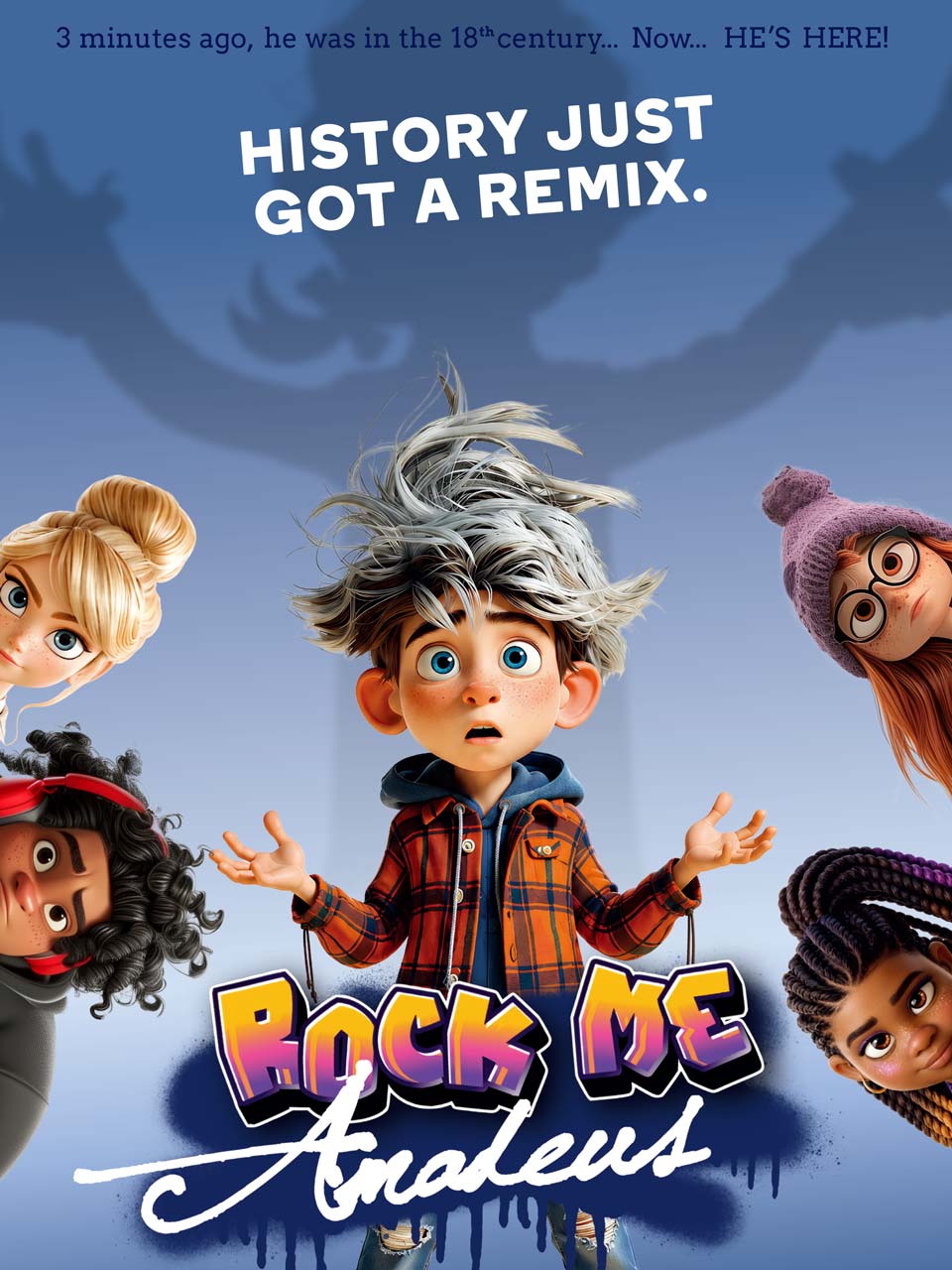
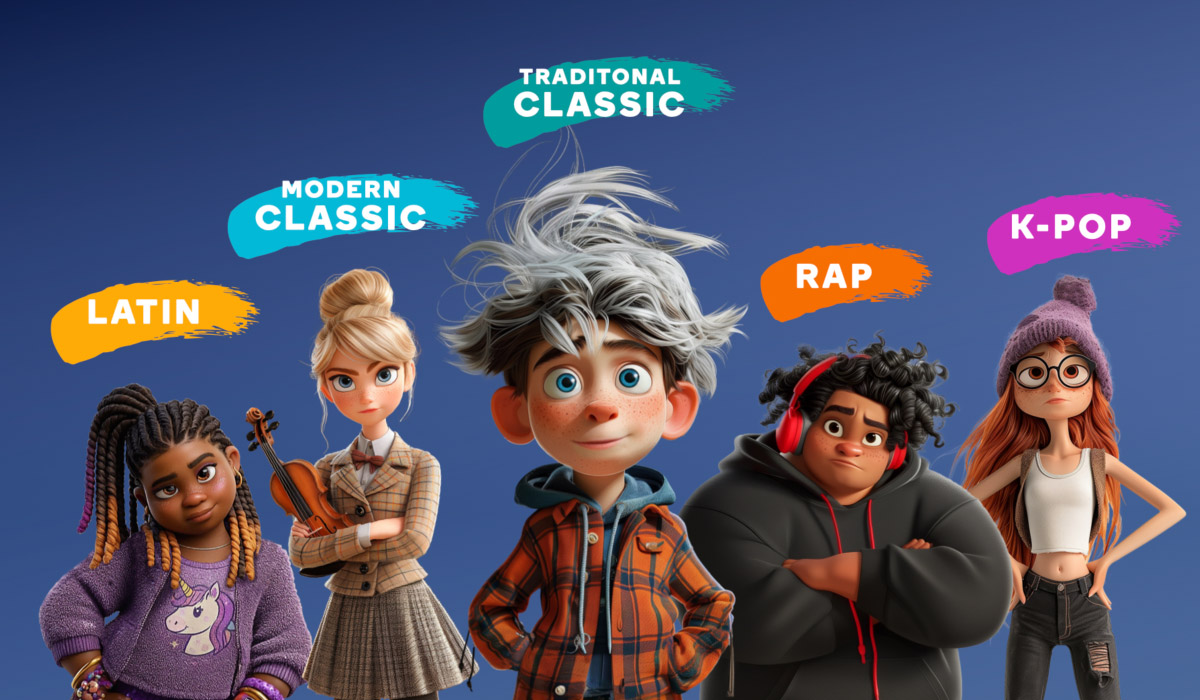
Toni Weiss: Characters and their limiting beliefs are front and centre. We have to fall in love with both Mozart, the slightly odd, creative genius, and with Deniz, Constance, Alice and Naya, who have found a safe haven in the music program but need to believe in themselves and grow into the creative people they really are.
We are also very invested in making our antagonist, Principal Kessler, a formidable foe. He believes in convenience and digital shortcuts and wants to replace the music program with a prompting class and a server room. But underneath that is someone whose own creative efforts were harshly criticised when he was young. He believes he is protecting children, even though he is wrong.
Music is also central to the series. It becomes a metaphor for overcoming limiting beliefs, teaching the characters about teamwork, perseverance, trusting their voice and believing in themselves. Mozart is the conduit.
And finally, this is a character comedy. Everything we do has to be appealing and funny, something kids would watch even if they have never heard of Mozart. Our north star is to make it as funny and as emotional as we can.
HN: Could you please tell us the story behind the visual creation? What kind of visual characteristics do you aim to achieve, and why?
Toni Weiss: We started visualizing these characters quite early. I am a writer first, but a visual director close second, and I wanted the team to be able to visualize them and be inspired by them. We worked with Eda Kaban, a designer from LA whom I had met on a feature film project.
We then moved into colour renderings and motion tests, while our Austrian Art Director Johanna contributed many appealing character variations and explorations.
Our next step is to develop a more specific design language and explore Vienna as a location, particularly the contrast between classical design and modernism.
We want that tension to shape the visual identity of the series, with the sets and locations reflecting the values of the show rather than simply serving as backdrops.
We are still discovering our world at this stage. It is both uniquely European and “universal with a ZIP code”. I love that specificity. It is hugely inspirational.
HN: I believe that the music for this series will be a very important element of its story. If you can share any vision or stories behind the music for the series at this stage, could you please let us know?
Toni Weiss: Excellent question. Music for our series is so central that it is more than a character; it is always a story engine.
The challenge is that we have to bring Mozart’s music into the 21st century, using new instruments, methods and sounds, while still doing justice to the original works.
Lars Wagner: We are very lucky that Stiftung Mozarteum in Salzburg, the leading authority on all things Mozart, are collaborating with us. Their insights have become a major inspiration for the writers and music team, and stories behind Mozart’s compositions have even found their way into episode storylines, along with a few Easter eggs for parents.
Markus Andorfer: The series is not meant to be a history lesson, but a way into falling in love with Mozart’s incredible music. After all, Mozart had a gift for making the complex completely accessible. He was the original hitmaker.
We are also exploring collaborations with guest musicians who can bring their own take on works such as Rondo alla Turca or Eine kleine Nachtmusik. We cannot name names yet, but the response has been overwhelmingly positive.
Toni Weiss: Reinventing Mozart for a new generation is a huge responsibility, but also one of the most exciting challenges of the project.