
“Jaadugar: A Witch in Mongolia”
Synopsis
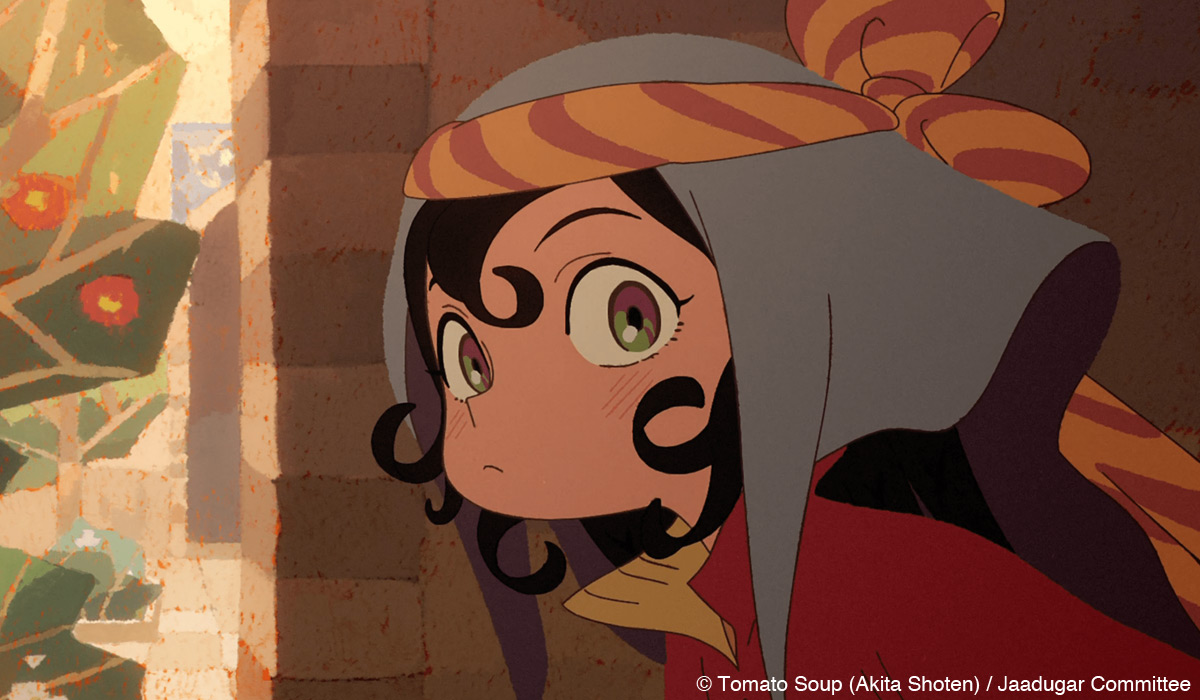
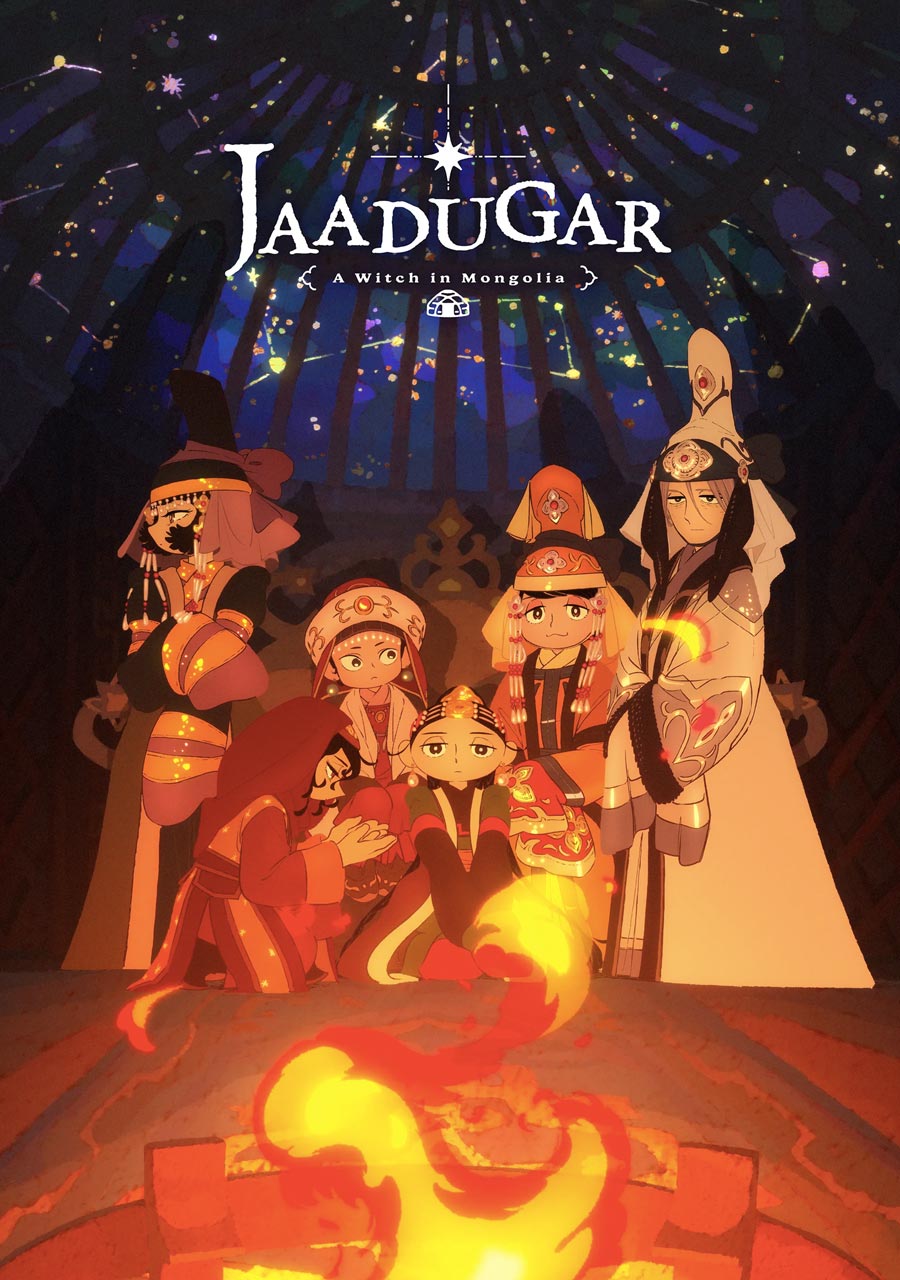
In 13th-century Iran, a girl named Sitara is sold into slavery but taken in by scholars who teach her the “power of knowledge”. As Genghis Khan’s vast Mongol Empire sweeps across continents and reaches her city, Sitara’s fragile peace is shattered, and her destiny as a “witch” is set in motion.
Jaadugar: A Witch in Mongolia
Directors: Naoko Yamada and Abel Góngora
Scriptwriter: Kanichi Katou (adaptation from A Witch’s Life in Mongol by Tomato Soup)
Art director: Yuri Kabasawa
Production: TV Asahi (Japan) and Science Saru (Japan)
Music composer: Koshiro Hino
Running Time: 23 min x 7 episodes
Jaadugar: A Witch in Mongolia is a Japanese anime series produced by Science SARU. Based on the hit manga A Witch’s Life in Mongol by Tomato Soup, the story guides you through the faithful historical world of early 13th-century Persia and Mongolia under the Mongol Empire, with appealing character designs and strong storytelling. It was selected for the official competition in the TV and Commissioned Films category at the Annecy International Animation Film Festival 2026.
We interviewed the directors, Naoko Yamada and Abel Góngora, on the story behind this unique project at the Annecy International Animation Film Festival.
Interview with Naoko Yamada and Abel Góngora
Trayton Scott (TS): What part of the original manga has personally appealed to you or resonated with you the most?
Naoko Yamada: First and foremost, I found the character designs to be very charming. I sensed a connection to the visual appeal of characters found in classic manga by renowned Japanese manga artists such as Osamu Tezuka and Mitsuteru Yokoyama, and I was immediately drawn in by their charming appearances. Then, as I began reading the story, I was increasingly captivated by the serious elements in the story and the power of its storytelling, which portrays actual historical events through a unique narrative style.
Abel Góngora: It’s a bit similar for me, but the contrast between the aesthetics and the serious story, and how dramatic it becomes, was very interesting. Speaking about Mongolia, I was very interested in Mongolia already a long time ago, but discovering Persian culture, reading the manga, and preparing the project was really amazing too because I didn’t know it was so amazing and beautiful, so that also made me very interested in knowing more.
TS: What aspect of the original manga do you wish to highlight the most to the audience in the anime?
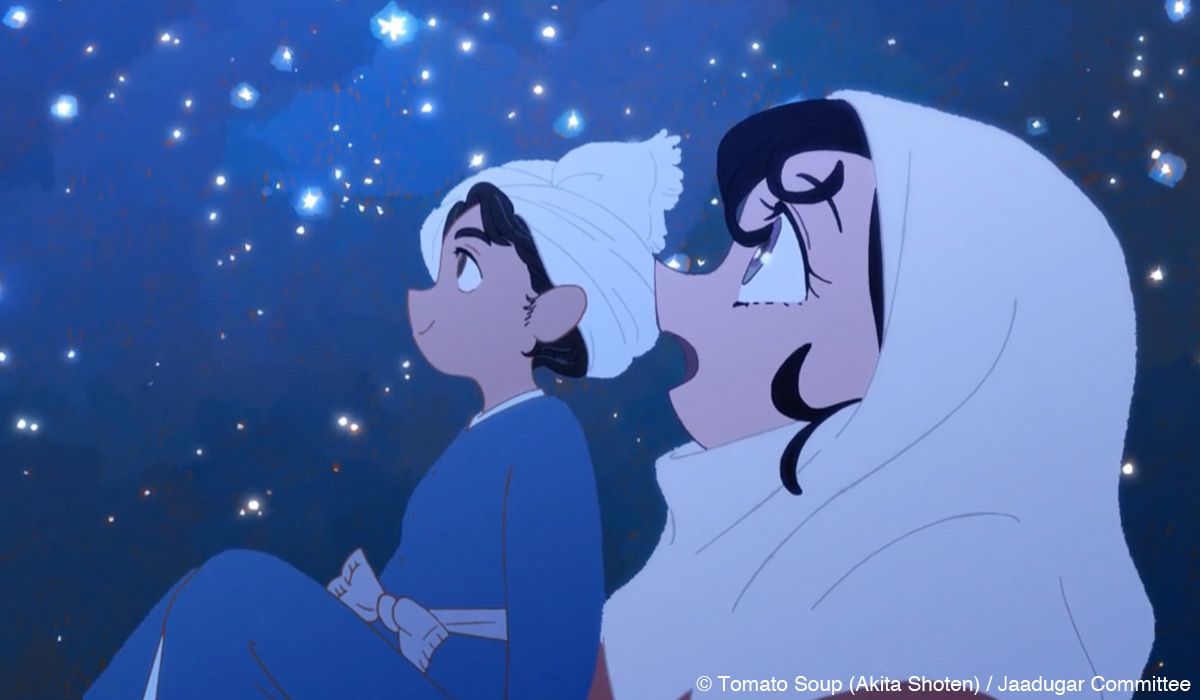
Abel Góngora: The beginning of the story occurred in the childhood of Shitara, the main character, showing the place where she is transferred to, and the family she’s living with in Persia. That part for me was very important, and in the manga it happens so fast. I wanted to show that part more, and put more effort into showing that, so we understand her feelings more after missing that life.
Naoko Yamada: As the protagonist, Shitara acquires a wealth of knowledge, learns how things work, and broadens her horizons as she grows up and matures. It is fascinating to see how this shapes her way of thinking. Furthermore, the way her outlook shifts depending on the circumstances, sometimes reflecting her desire to protect and cherish Persia, and at other times finding herself sympathising with the Mongol way of thinking that she once hated, which shows how deeply conflicted she is inside. This makes her feel incredibly human and compelling, and I hope viewers will enjoy watching this aspect of her development as well.
TS: I love the music in Jaadugar, it feels very authentic to the theme of the story. We would like to hear the story behind the music, mainly on the creative decision-making you made for the music.
Naoko Yamada: Firstly, as this is a story centred on a specific ethnic group and involves relations between nations, we placed great importance on ensuring that the music focused on the musical culture and traditional instruments of the region where the characters live. Furthermore, we wanted the music for this series to be dynamic at times, and at other times very minimalistic, closely reflecting the characters’ emotions. As Hino-san is good at this kind of music, we asked him to take on the project. When we began production on the main series and work on the music started, Abel already had a clear vision and was liaising directly with Hino-san and the sound director. So, when it came to the finer details, such as ‘this piece of music should play in this scene’ or ‘it would be better for this music to start from here’, Abel took the helm and steered the process skilfully. Having watched the finished film, I feel that the music fits perfectly, and I sense that there truly is a ‘Jaadugar’ world where the music takes you on a journey. I hope you’ll enjoy the wonderful music that awaits in the episodes to come.
Abel Góngora: It was very interesting because I think we chose that person because Yamada was very interested in the music. He does percussion as well as electronic music. So it was, for me, a very different image of what I wanted. I wanted something more traditional and epic. But I think with his special personality, he mixed Japanese music with some Persian music, and we thought the result is very, very interesting. We didn’t try to make Persian music perfectly or Mongolian music perfectly, but just have a general vibe, especially without falling into the romanticized Orientalism, for example. We wanted to be very careful, So that’s why he took some real Persian instruments and Mongol instruments. We had a Mongol drum, for example. So it was a very important point for us.
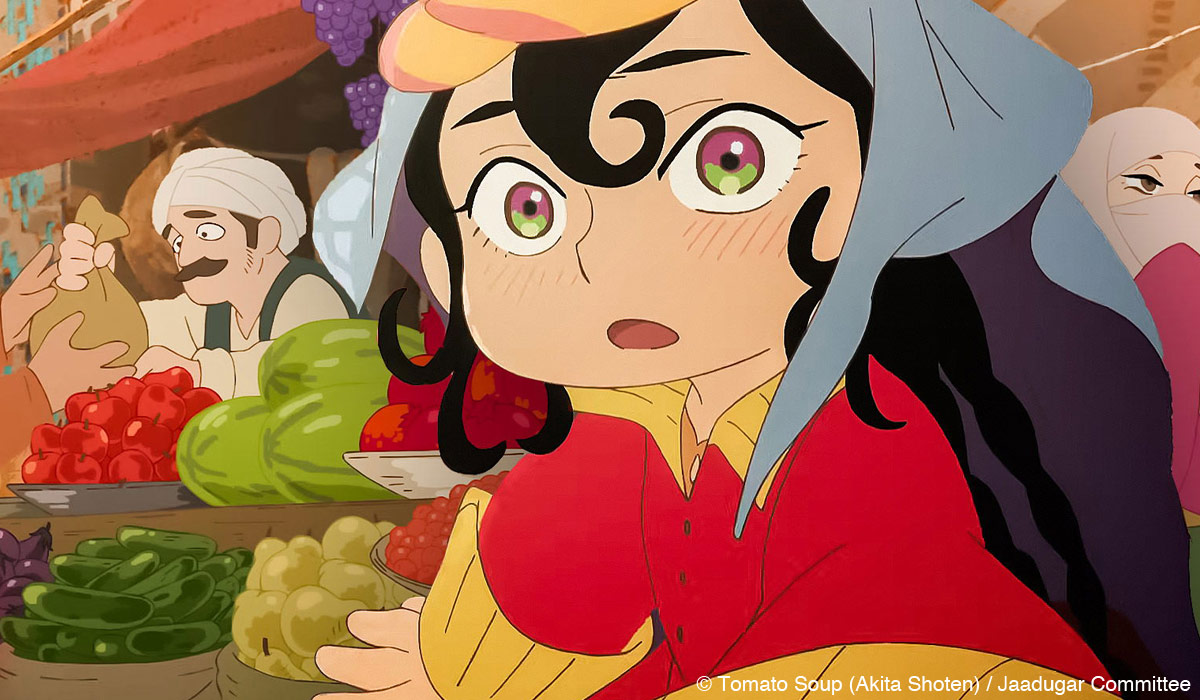
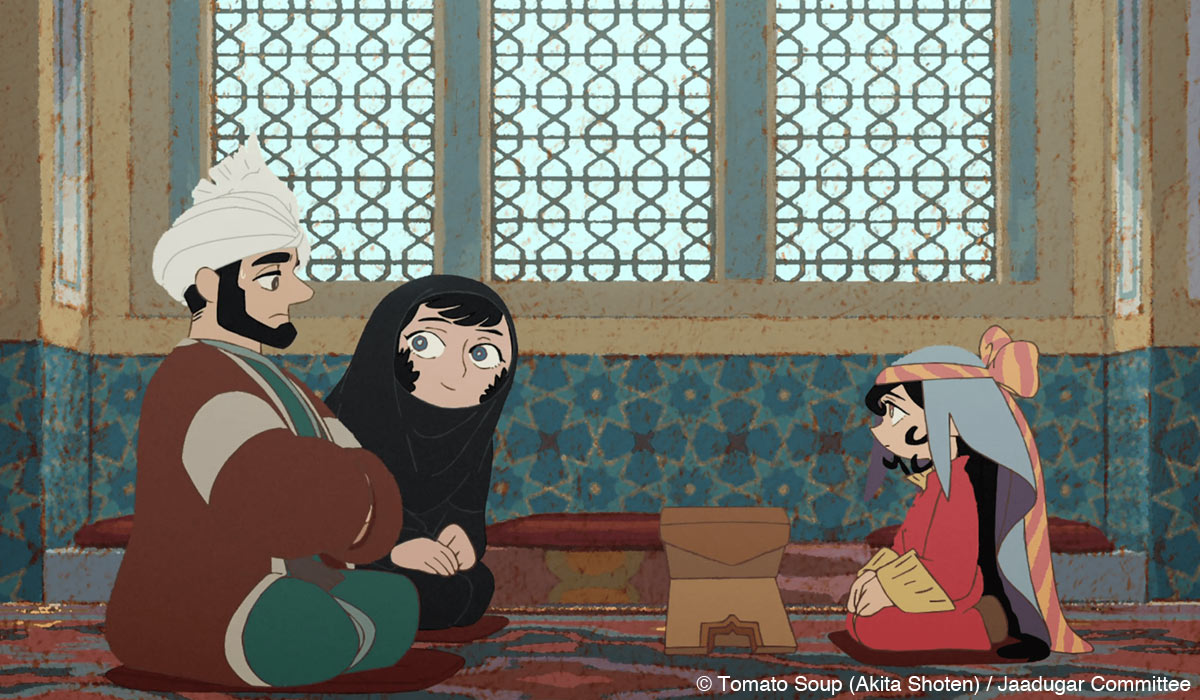
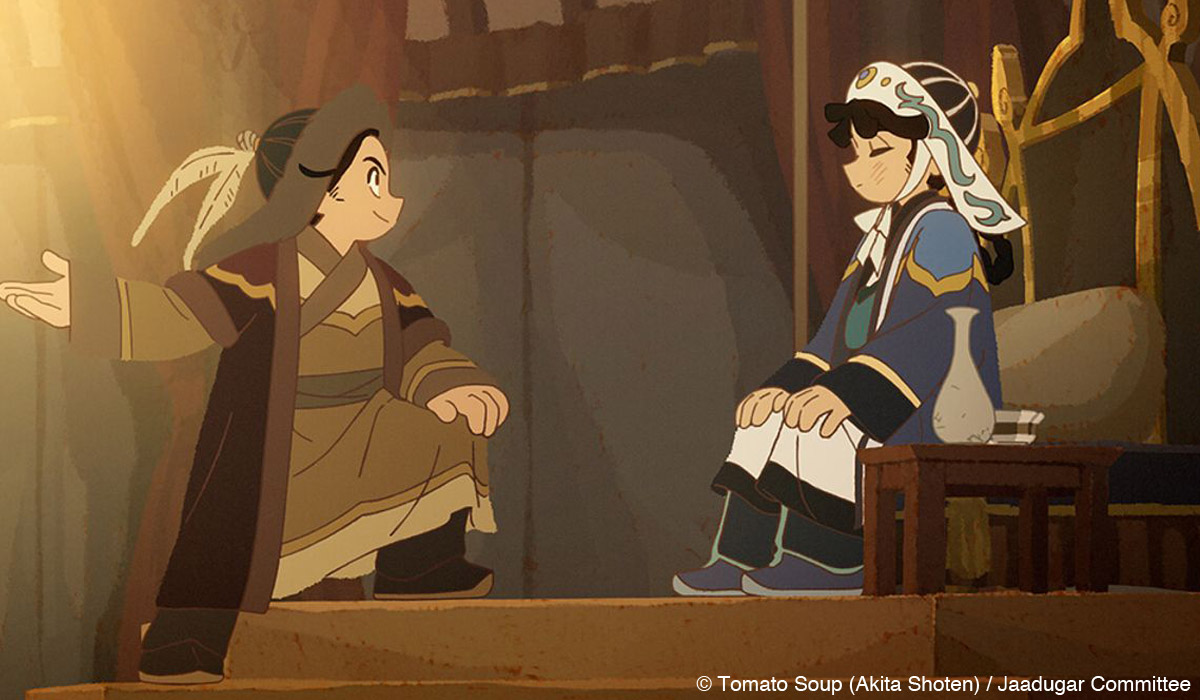
TS: I’ve read the original manga, and in the anime I’ve noticed the background art has a very certain style, like the more painterly style and the red accents, and I thought it was interesting, so I would like to hear about the creative decision-making process that led to the style that we have in the anime?
Abel Góngora: I think we started very normally, like talking with the art director, And then we would gather together and talk about what direction to take, and then every week we would see new pictures. And then little by little, maybe choose from two or three options. And then we’d say “let’s go this way” or “let’s add this reference”. But it was very organic in a way that we don’t say we have this reference and we want you to follow this. It was very much trial-and-error.
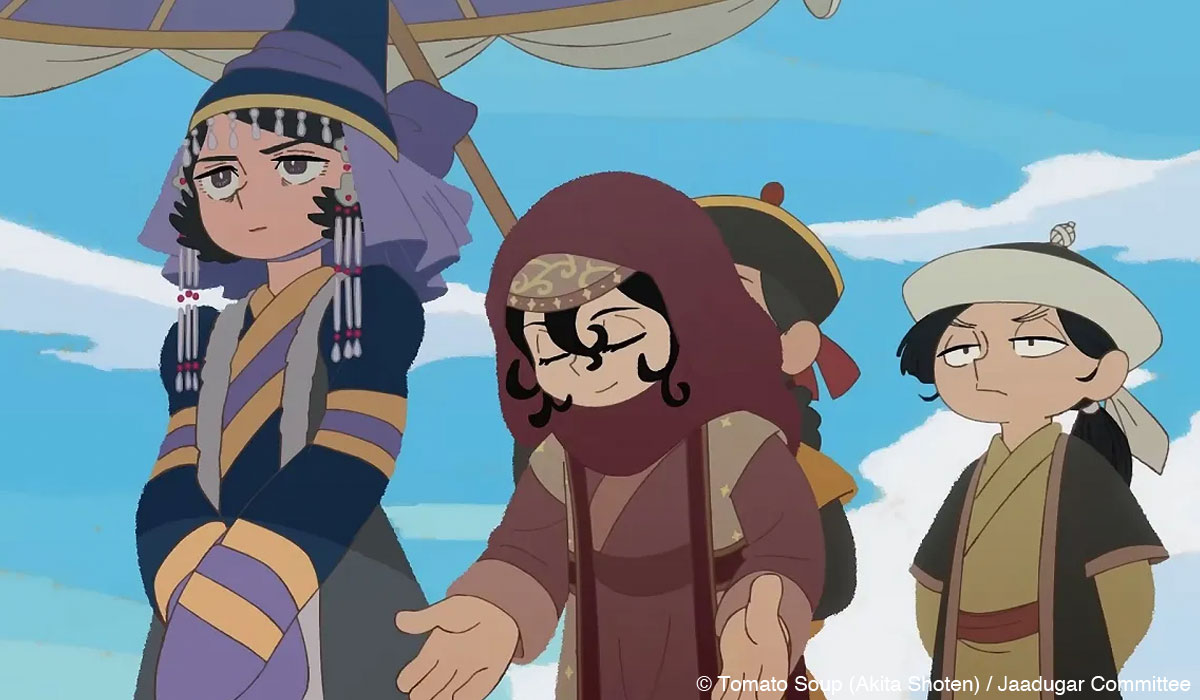
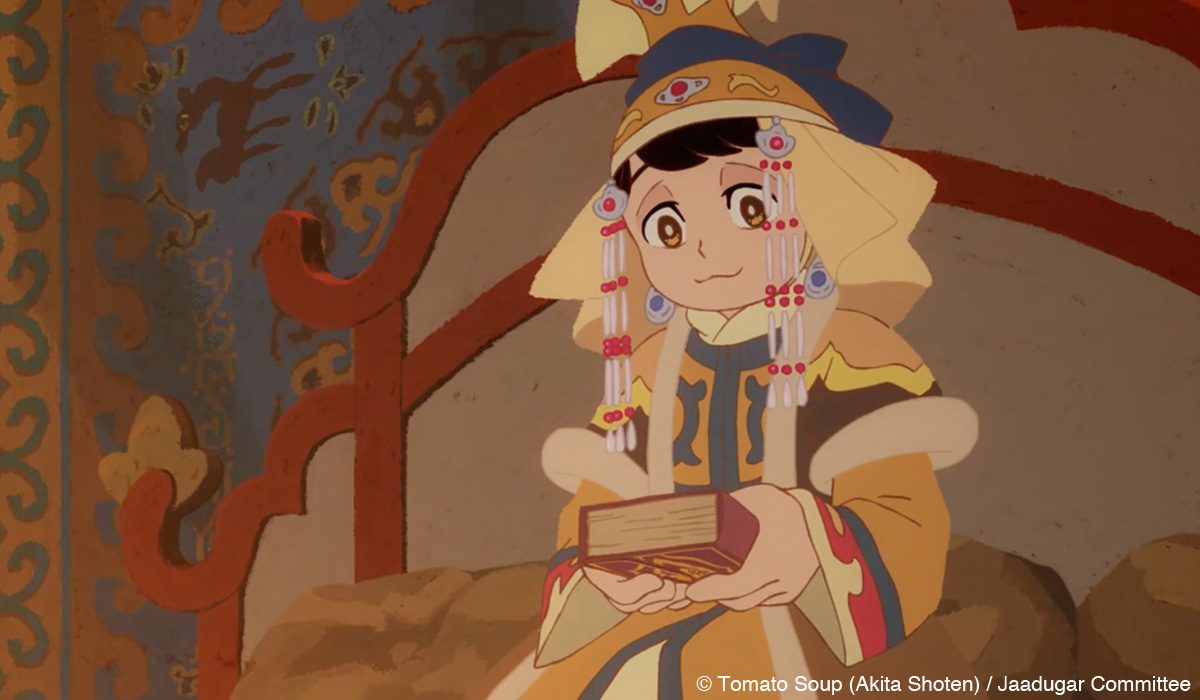
It started with very traditional anime backgrounds, and then slowly becoming more artistic because we wanted to try new things, especially in the beginning of the story in Persia. We have the architecture, the mosaics, and it’s very beautiful, so we wanted to experiment a lot with that. Then when we get to Mongolia, we cannot also try to make both worlds combined, it’s graphically a completely different universe, but the art director basically came up with this style and little by little it became what it is.
It was not really a clear direction from the beginning but she decided everything on how it’s gonna be and talking with us. Same with the coloring, characters, and everything was a little bit like that. Just conversation by conversation.
TS: This feels like a very unique project. What are the challenges unique to this project that is not found in other projects?
Naoko Yamada: When the project first began, we talked about how unique it was and how it would likely become quite a standalone work within the world of animation. However, once production actually got underway, I became so absorbed in the project that I no longer found myself consciously thinking about what makes it different from other works. I have become so immersed in creating it that depicting this world now feels completely natural to me.
Abel Góngora: For me, every time I want to try something new, I look for ideas that we can add to make it a little bit unique and make it look different from mainstream anime or from other projects we have done before, and also through conversation. We talked about, for example, trying to delete the outer line in some characters, so I proposed that could be a very nice experiment. Also things like not having shadows. There are many ideas we talk about, like trying to have very dark hair for the main characters so we bring back some of the strong black from the manga in some cuts. For storyboarding, we could try to have maybe a flat composition sometimes that I wouldn’t use in a more realistic project, and thinking about how beautiful the architecture is in Persia so maybe we can do some more artificial framing or a centred camera, that I wouldn’t do in other more “action” projects.
So, we try many new things, but every director thinks a little bit about that at the beginning. I’d say maybe because the manga was already looking special, like very different, not mainstream at all, so we already started from that point. And then we brought some ideas from the the fact that it’s a little bit vintage. I really like Toei animation, so I would think a bit about the art direction in all Toei movies, particularly the very first years of Toei, and then we wanted to also bring that vintage style that the manga already has, but in a different way. Also the Mongolian-Persian miniatures painting also have some style that somehow influences the art. Also the original mangaka’s personal colour illustrations were an influence, too.
TS: What was the toughest challenge you have faced in this whole project, and how did you overcome them?
Naoko Yamada: In terms of my visual approach, although animation is fundamentally about bringing drawings to life, I have spent years exploring and experimenting with ways of creating images by treating each character as a real person and imagining that they are being filmed by a real camera.
This time, however, I have taken a completely different approach, which represents a major challenge for me. Rather than relying on the camera to create the atmosphere of the work, I am focusing on the inherent appeal of animation itself: the appeal of the characters’ movements, and the way a work becomes more and more engaging simply through those movements.
I am challenging myself to revisit a method of filmmaking that is driven by my admiration for and respect toward the craft of animation itself.
Abel Góngora: For me, maybe working with somebody as important as Yamada or the character designer Yoshida made me feel a bit under pressure, because trying to be at the same level as these really amazing artists was very difficult. It’s also difficult trying to respect the culture, such as Persian culture, and understanding enough so we never disrespect them or do something wrong enough to upset people, especially Mongolian and Persian culture. We wanted to be historically faithful, but not to an extreme degree, so that if we don’t try to be historically accurate, at least we are aware of it. We’d have a reason to stray from that, but not because we are careless. That was also difficult.
TS: How would you describe to the European directors what your experience is like working on Jaadugar, a Japanese anime, and what would they find the most surprising about it?
Abel Góngora: The bar is really high, so you need to put so much effort, and it’s very competitive, but at the same time it’s the most exciting animation market, for me at least. The stories are also for adults and, once you get used to this working style, it is very difficult to go back. If I return to Europe, it is probably going to be for children’s or simplistic animation, so I don’t feel I could do that, now that I’m used to Japan. Also, in this project, I’ve been working in Japan for 13 years so now it’s just my job anyways. It’s nothing different about all the projects I’ve done before.