
Synopsis
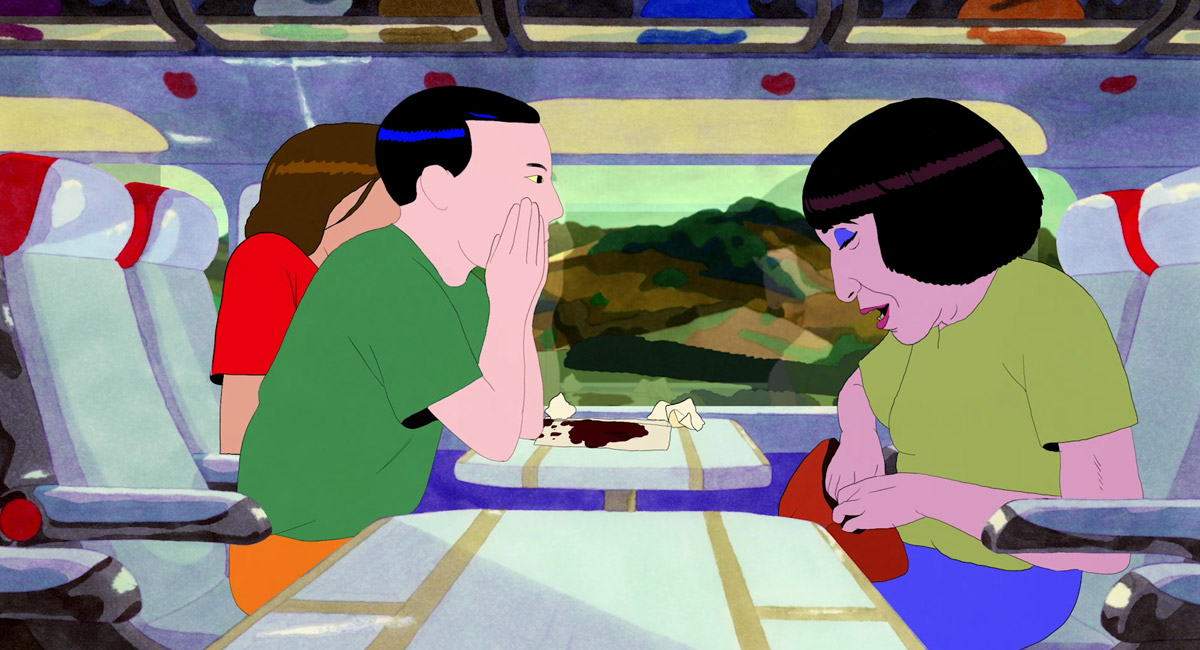
During a train ride, Ariel and Paul pass the time sketching their deepest fears. Their game takes an unexpected turn when Gilda, a mysterious passenger, intrudes on their exchange. Yet her relationship with fear seems far less innocent than their playful drawings.
Film credits
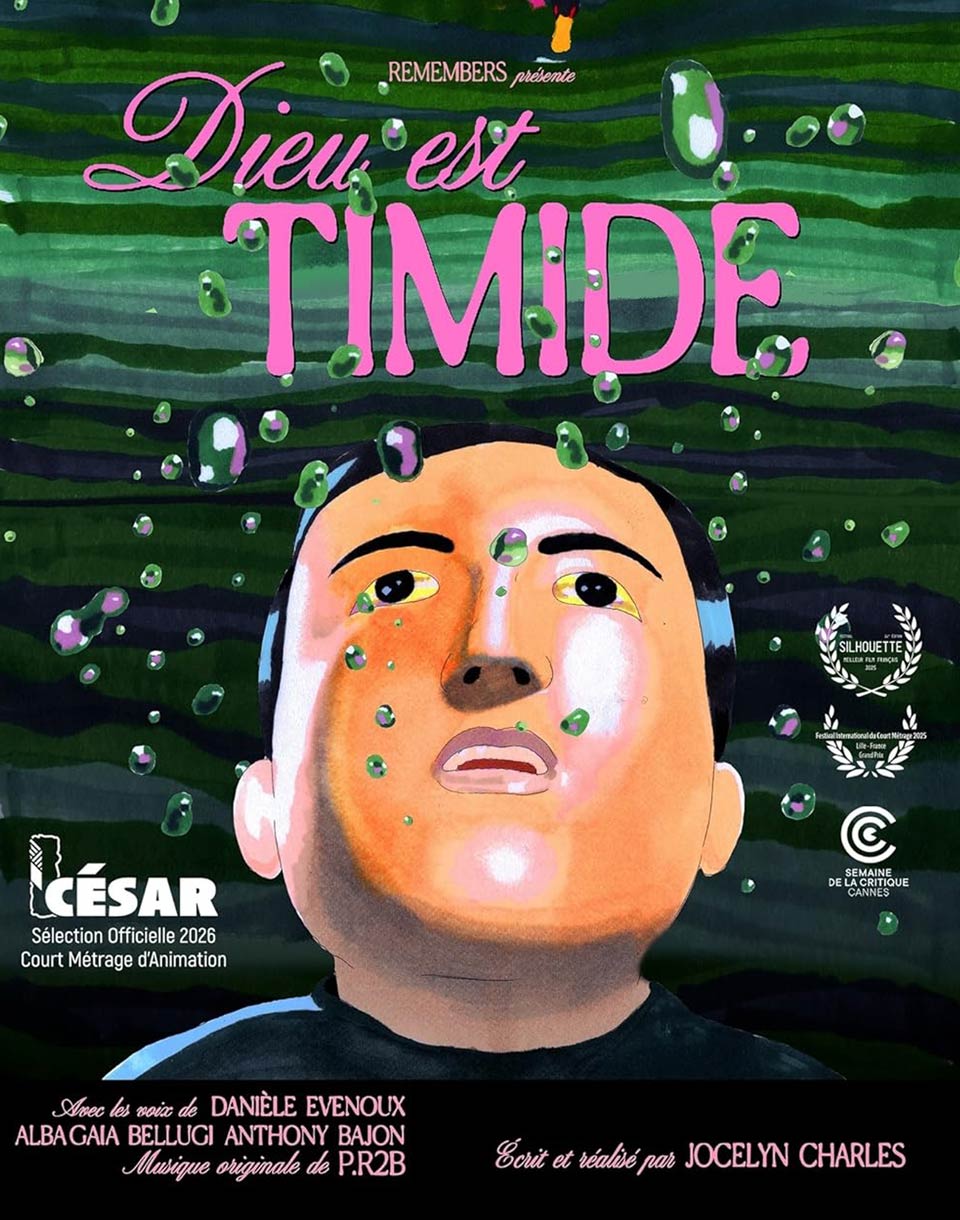
Director and Author: Jocelyn Charles
Producers: Ugo Bienvenu (Remembers, France), Félix de Givry (Remembers, France), and Joséphine Mancini (Remembers, France)
Music composer: P.R2B
Running time: 15 minutes
Dieu est timideis is a 2D animated short that presents a mysterious narrative, brought to life through horror and visceral, unsettling imagery, supported by impressive visual design and colour palettes. The film continues to captivate the audience’s interest and curiosity.
It has already received nominations and awards at various international film festivals, including winning the Lab Competition at the Clermont-Ferrand International Short Film Festival 2026 and the Zlatko Grgić Award at the World Festival of Animated Film, Animafest Zagreb 2026. It has also been nominated for the Leitz Cine Discovery Prize at Cannes Critics’ Week 2025, Best Animated Short Film at the César Awards 2026, and the International Competition at the Stuttgart International Festival of Animated Film 2026.
We had the pleasure of interviewing Jocelyn Charles, the director of Dieu est timideis.
Interview with Jocelyn Charles
Hideki Nagaishi (HN): What were you most hoping to express through the story, and what experience or message did you want the audience to take away?
Jocelyn Charles: With God Is Shy, I think I was mainly trying to create a feeling rather than deliver a specific message. I wanted the audience to experience a sense of unease and fascination that comes from confronting something impossible to fully understand. The film deals with fear, but not in a purely narrative or “monster-based” way. It is more about existential fear, namely the feeling of facing something immense, indifferent, and beyond human comprehension.
I have always been fascinated by metaphysical questions, astronomy, and the unconscious, and these themes naturally found their way into the film. The title evokes the divine, but not in a biblical sense. I imagined God more as a cosmic force, something closer to chaos or entropy than to a human figure. I am particularly drawn to the idea of cosmic horror: the terrifying realisation of how vast the universe is and how little we truly understand about it.
At the same time, I did not want the film to become overly explanatory. I appreciate stories that leave space for mystery and interpretation. In a way, the film suggests that some answers may simply be inaccessible to us, or that we may not even be capable of asking the right questions in the first place. I hope the audience leaves the film with that lingering feeling, somewhere between wonder, fear, and curiosity.
HN: Where did the initial idea for the film’s story come from? And what motivated you to make this film?
Jocelyn Charles: God Is Shy was born from my long-standing desire to create a short film. It was something that had often been discussed but never truly initiated until Ugo Bienvenu and Félix de Givry, the founders of the studio Remembers, where I work, encouraged me to finally pursue it. Knowing that I tend to find inspiration through constraints, they challenged me to create a one-minute animatic within two months.
I immediately began drawing scenes instinctively, without writing a script beforehand. My only real guideline was to create images and moments that I, as a viewer, would personally want to see. The story developed very organically from there.
The film also became a way to consolidate the artistic universe I had already started exploring in previous projects. In the music video Hématome by the French music group L’Impératrice, which I co-directed with Roxane Lumeret, I began working with themes of monstrosity and distorted bodies. Later, in the music video How Do I Make You Love Me by the Canadian singer-songwriter The Weeknd, I developed those ideas further into horror and even gore imagery, including blood, decay, and transformed faces. These experiences provided me with both the technical tools and the confidence to build a more personal narrative around these recurring interests.
I also realised that horror offers an incredibly rich visual playground, especially in terms of lighting, colour, and staging. After directing two horror-oriented music videos, I became fascinated by the atmosphere this genre can create in animation, and I wanted to explore it in a longer and more personal format.
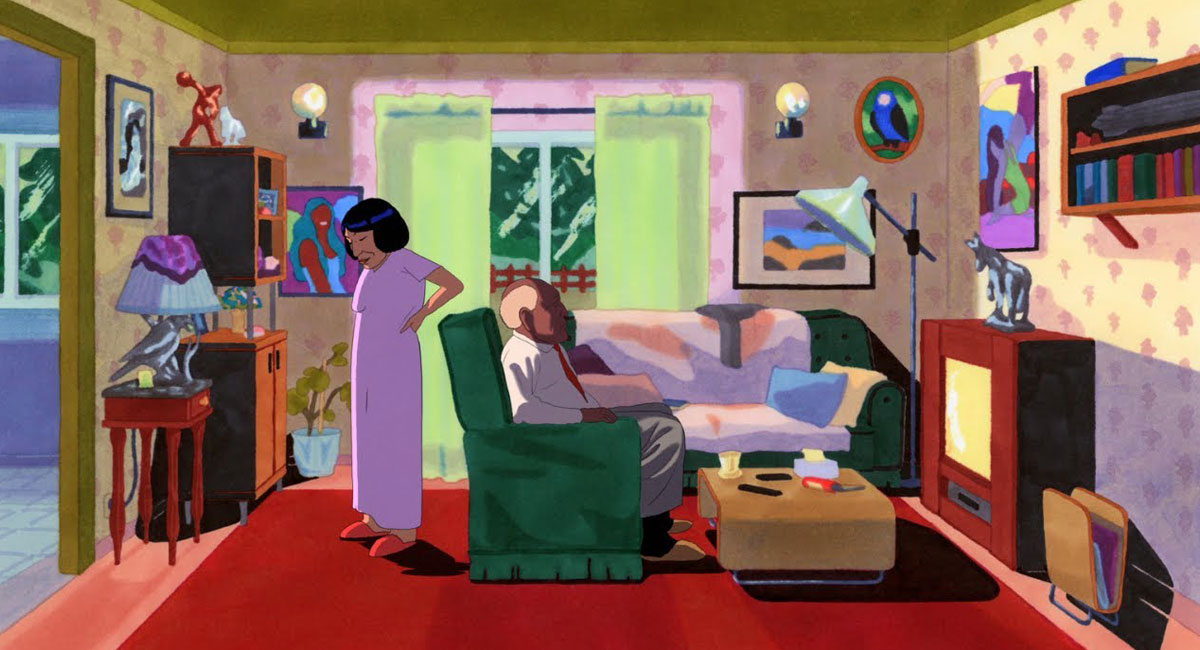
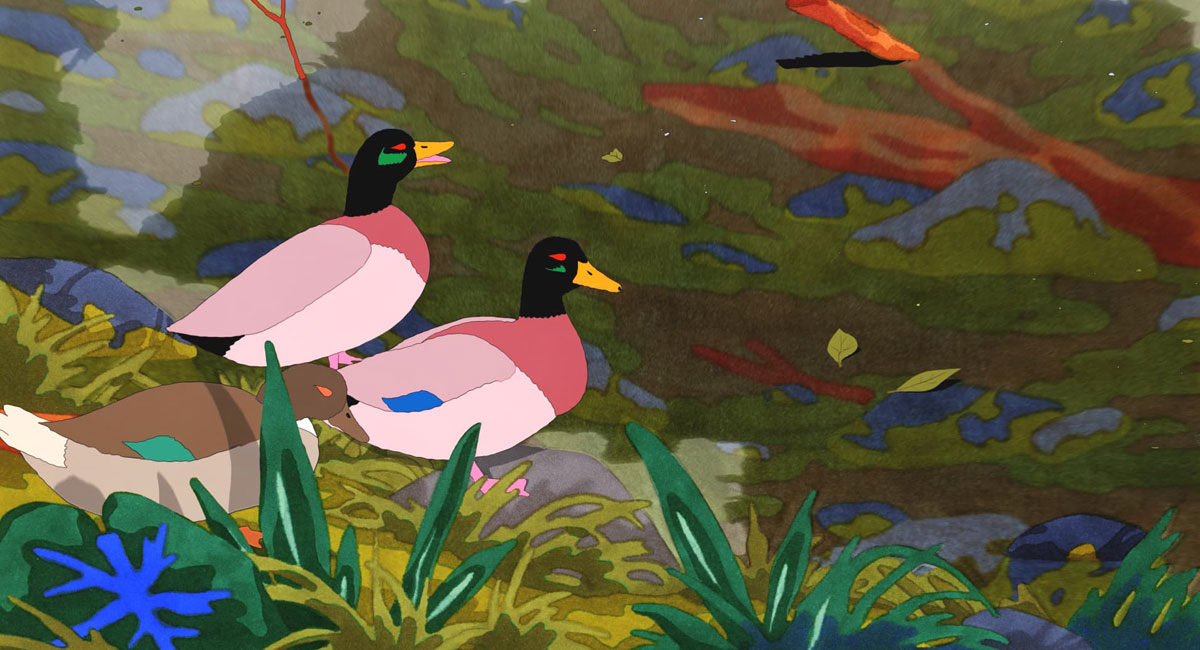
HN: How did you develop the film’s story from the initial idea? What aspects did you focus on most during development, what challenges did you encounter, and how did you address them?
Jocelyn Charles: The story developed in a very intuitive way. I did not begin with a traditional screenplay or a fully planned structure. Instead, I built the film by imagining sequences and visual ideas that emotionally interested me, and then gradually connecting them. Since my background is closely linked to music videos, I naturally tend to think first in terms of rhythm, atmosphere, and visual progression rather than purely narrative logic.
One aspect I paid particular attention to was maintaining a sense of mystery while still ensuring emotional coherence. I wanted the audience to feel slightly disoriented, yet never disconnected from the emotional experience of the characters. The train setting emerged quite naturally during the process, probably because I was travelling by train frequently at the time. In retrospect, it became symbolically important because it represents transition and movement that the characters cannot control.
The train also helped resolve practical storytelling challenges. Since the characters are confined within it, I could shift into flashbacks, dreams, or surreal scenes without needing fully realistic transitions. The audience accepts these ‘teleportations’more naturally because the film already operates within a suspended and unstable space.
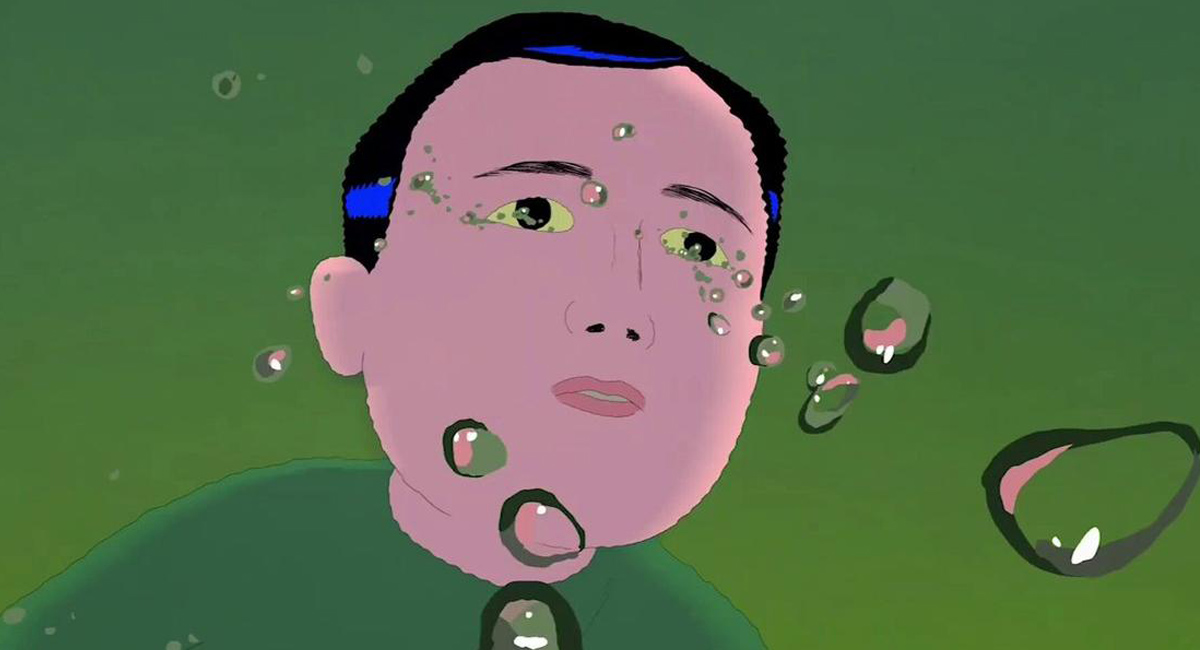
One of the biggest challenges was balancing surrealism with emotional sincerity. I am particularly drawn to transformations of matter in animation, such as skin becoming liquid or blood turning into syrup, as well as impossible bodily distortions. I appreciate how animation allows materials to evolve almost infinitely. However, I did not want these images to feel purely aesthetic or gratuitous. For example, the sequence in which tears endlessly flow from the character’s eyes originated from an earlier animation experiment I had created on Instagram, but placing this exaggerated imagery within a serious dramatic context gave it a very different emotional weight.
Another important aspect was sound design. In horror, sound is often used very aggressively to generate fear, but I became interested in doing the opposite. While watching Princess Mononoke, I was struck by how silence can sometimes feel more disturbing than loud sounds. This inspired me to create certain moments, particularly the crying sequence, with an almost complete absence of sound, as a form of inverted jump-scare, a technique for evoking fear.
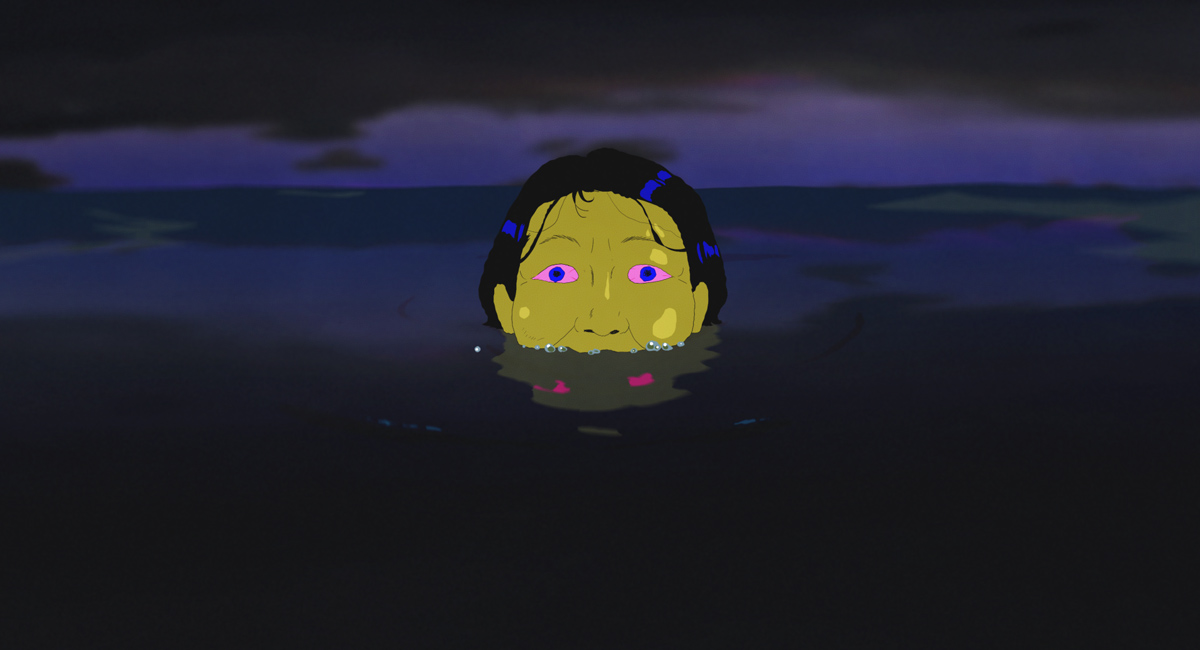
HN: How did you develop the overall visual design and colour palette of this film, and what did you pay particular attention to?
Jocelyn Charles: I am strongly influenced by Japanese visual storytelling, both in manga and anime, and it is fair to say that they are masters when it comes to stories aimed at teenagers and adults. In the West, animation and comics still tend to be associated with younger audiences. I believe that we can clearly observe the influence in the designs, acting, and so on.
I am a fan of Junji Ito’s work. In 2021, I collaborated with the American network Adult Swim, which was broadcasting an adaptation of his manga Uzumaki, to create an animated tribute.
Regarding colour, I wanted to use saturated primary colours throughout the story.
Colour is, of course, a key tool for conveying emotion. The blue and purple tones of the train create a sense of coldness that prepares the audience for the dramatic event to come, while the warm colours of the passing landscape suggest nature as a more comforting presence. The characters themselves are often depicted using highly saturated colours to convey lightness and an almost childlike quality.
Saturated colours have gradually declined since the 1960s across many fields, including furniture, fashion, and even comic books and popular culture. In addition to conveying lightness, they can also introduce humour, serving as a way of not taking oneself too seriously. For example, in 1950s depictions of Superman, colours were highly saturated, and poses and settings were stylised and symbolic. In contrast, contemporary comics and films often use muted palettes and adopt a more serious tone, with Superman’s costume appearing almost grey, which I find regrettable.
The visual design was also strongly influenced by my interest in horror cinema, particulary in the use of lighting and colour to build atmosphere. A major inspiration was The Wailing by Na Hong-jin. I admire how it blends multiple genres while maintaining a grounded and believable atmosphere, and this balance influenced both the visual and narrative aspects of my film.
I also wanted the animation to incorporate qualities of live-action filmmaking. In my view, animation is often most effective when it recreates the imperfections and spontaneity of reality. I experimented with fluid camera movements and naturalistic character behaviour, including hesitation, small gestures, and minor imperfections that are not strictly necessary for the plot. These details help the audience forget that they are watching animation.
Using 3D was essential in achieving this. It allowed me to think spatially about both the sets and the camera, and to maintain consistent staging without repeatedly adjusting perspective. This gave me greater freedom to focus on direction and atmosphere.
At the same time, I wanted to preserve an organic texture, particularly through the use of alcohol-marker rendering. Combining these approaches became one of the film’s most difficult technical challenges. Marker drawing takes time but is extremely precise, making it impractical to redraw environments from multiple perspectives. I therefore developed solutions involving layer separation and subtle perspective distortion to simulate camera movement while preserving the handmade texture.
Colour was also closely tied to emotion and symbolism. Water gradually became central to the film, both visually and thematically. I came to realise that many of the film’s fears and anxieties were linked to water, femininity, pregnancy, and creation itself. Water became almost a manifestation of the subconscious, something uncontrollable that affects both the characters and the viewer.
HN: Could you please tell us about the creation of the film’s music?
Jocelyn Charles: Music plays an important role in my work, as my primary storytelling medium has been music videos. I have always enjoyed building narratives around instrumentation and rhythm, letting them guide and inspire me. I approached this film in the same way, beginning with temporary tracks that helped shape its rhythm, structure, and emotional progression.
Sound in general is essential for bringing authenticity and spontaneity into animation, which would otherwise have total control over the image. Unlike live action, where unpredictability and realism occur naturally, animation involves controlling every detail on screen. In my view, sound is one of the most effective ways to reintroduce that sense of life and imperfection into such a perfectly constructed medium.
My main influence was the soundtrack for HBO Original-series The White Lotus. The composer, P.R2B, fully understood this reference in her compositions. I like how the music balances humour and tension. It immerses the audience in a mystical, hypnotic, and original atmosphere. I wanted the presence of a god, or at least a distant subconscious, to be felt in each theme, like an echo of a truth that remains difficult to grasp. This explains the unusual and sometimes offbeat nature of the instruments, which range from unfamiliar sounds to very raw and natural ones.
However, I wanted the originality of the sounds to be contrasted with a theme, a melody that was rather catchy and easy to remember, a melody that is accessible and pleasant while still managing to keep a strange, humorous, and exotic quality.