
Night Tram
(Status: in development)
Synopsis
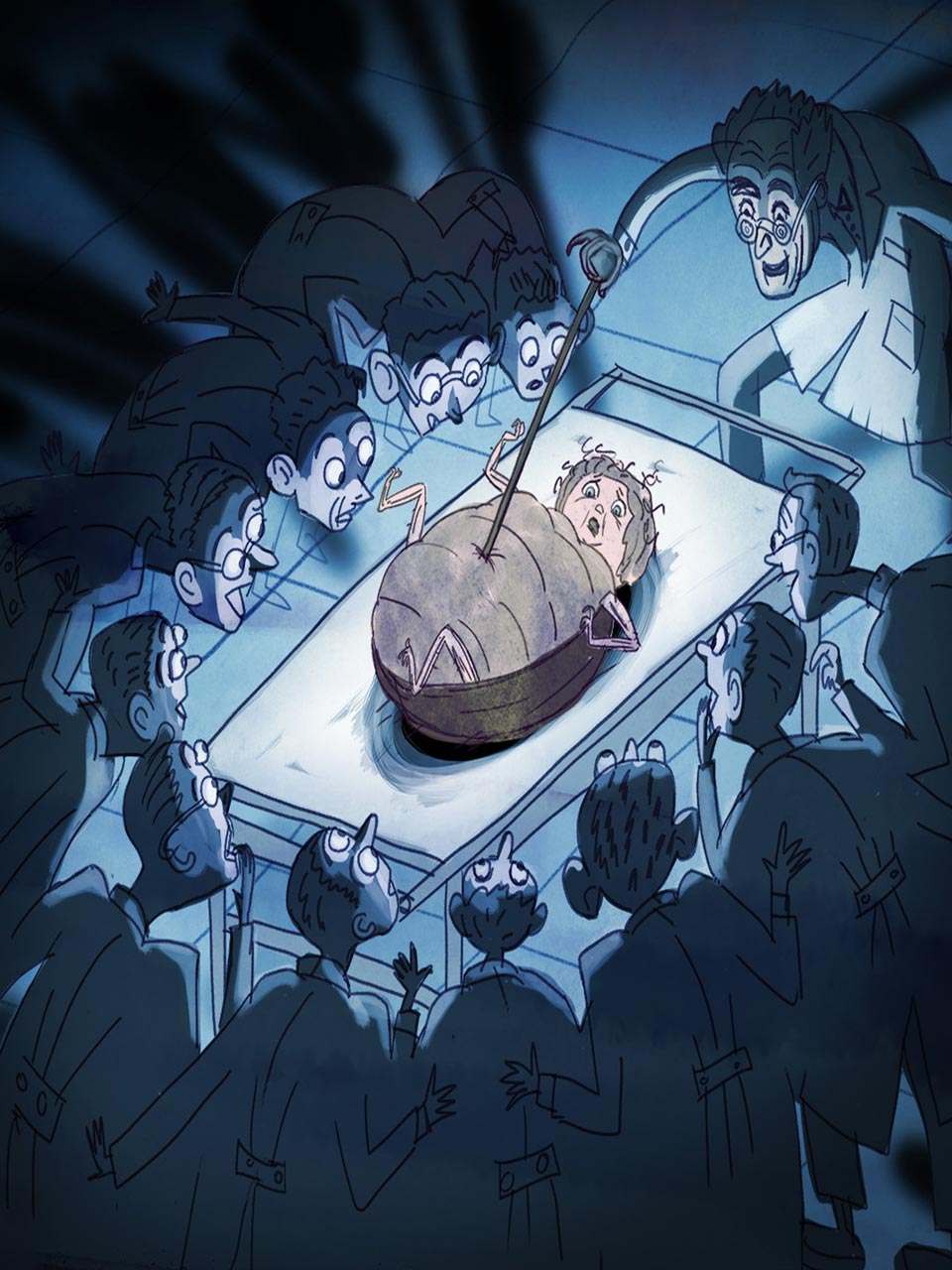
The Best Driver on the road to Metamorphosis. Despite her age, Božena is the best tram driver in the city. But when she has to drive a modern tram, she loses her nerve and is fired. Božena refuses to give up and tries to find a new direction in her life. But she has to hurry, her body is aging and turning into a fragile BUG. The hope for Božena is her granddaughter, who is growing as fast as Božena is shrinking.
Night Tram
Director and Author: Michaela Pavlátová
Main Producers: Petr Oukropec (Negativ, Czech Republic) and Kateřina ČernáAnca (Negativ, Czech Republic)
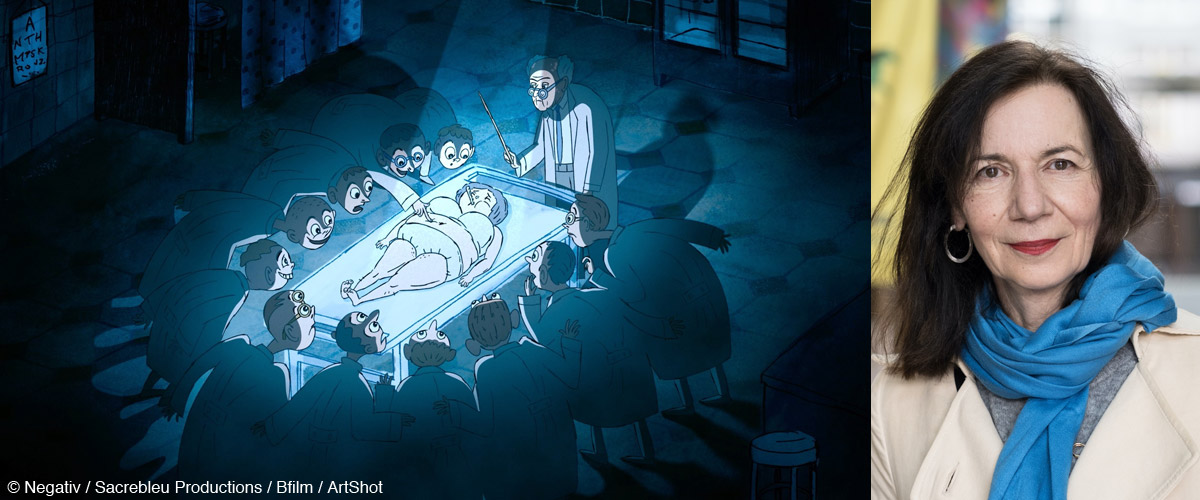
Co-Producers: Ron Dyens (Sacrebleu Productions, France), Peter Badač (Bfilm, Slovakia), and Agné Adoméne (ArtShot, Lithuania)
Target audience: Young adults / Adults
Technique: 2D digital
Running Time: 75′
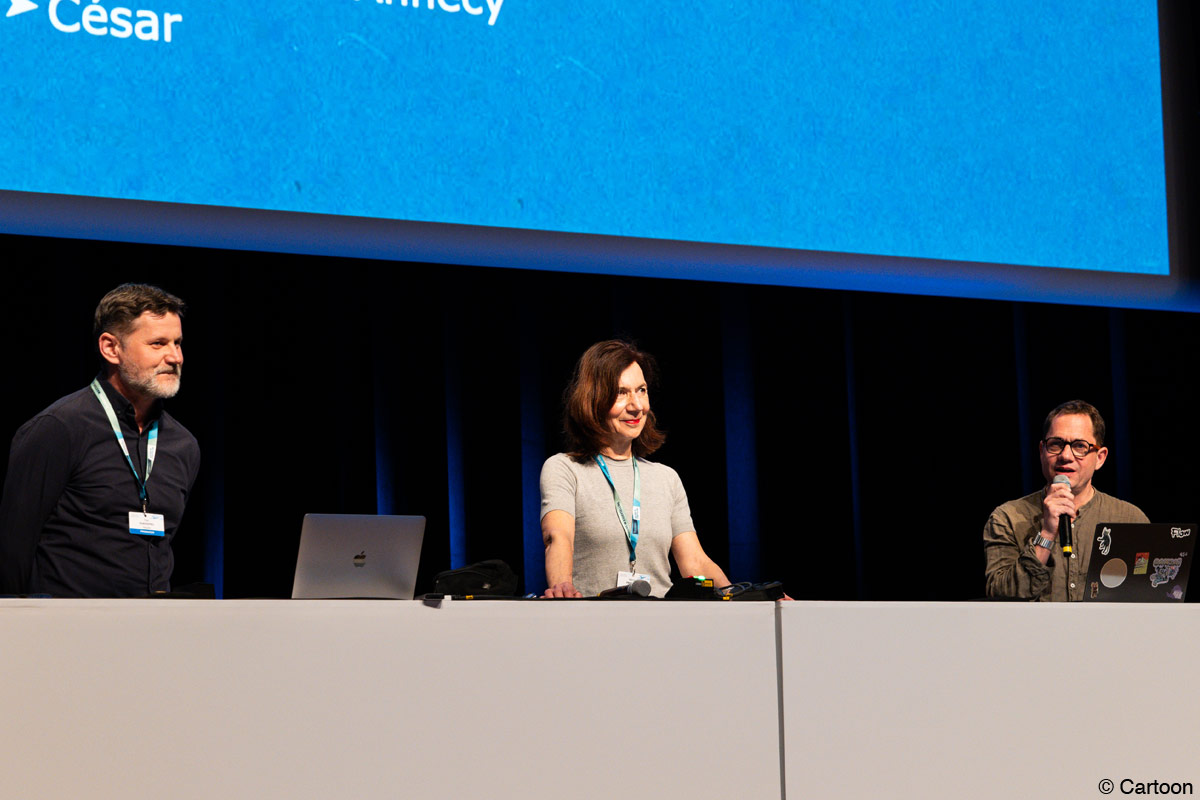
Night Tram is a new film project by Michaela Pavlátová, who is famous for the multi awarded animated feature film My Sunny Maad* (2021), including awards at the Annecy International Animated Film Festival and the César Awards, and for several great animated shorts such as Repete (1995), which won the Golden Bear at the Berlin International Film Festival.
It will depict a thoughtful story, with a sense of humour, that deals with an important theme for all our lives, which is aging. It uses the magic of animation to invite us into a world where we are able to face this topic and reflect on it carefully.
Here, we would like to share with you her insightful words about the story behind this interesting new film project.
*: You can read our special interview with Michaela on My Sunny Maad here.
Interview with Michaela Pavlátová
Hideki Nagaishi (HN): Could you please let us know the film’s story in brief, along with what you want to depict the most through the film?
Michaela Pavlátová: Night Tram is a comedy about aging, a fresco about a woman aged 60+, and a slightly incorrect portrait of an ordinary woman. It is based on absurd situations and the troubles of aging people who still want to seize a chance and take risks. We also want to show hope that life continues in reflection and in the remembrance of our loved ones. It is told at a brisk pace and fully uses the wide range of possibilities of animation.
Tram driver Božena, a workaholic for whom the tram is her whole life, is tormented by her mother even in adulthood and clings to life like a tick in a changing world. But you cannot stop time. As she grows older, she is unable to learn new technologies, causes a traffic accident, and is fired from her job.
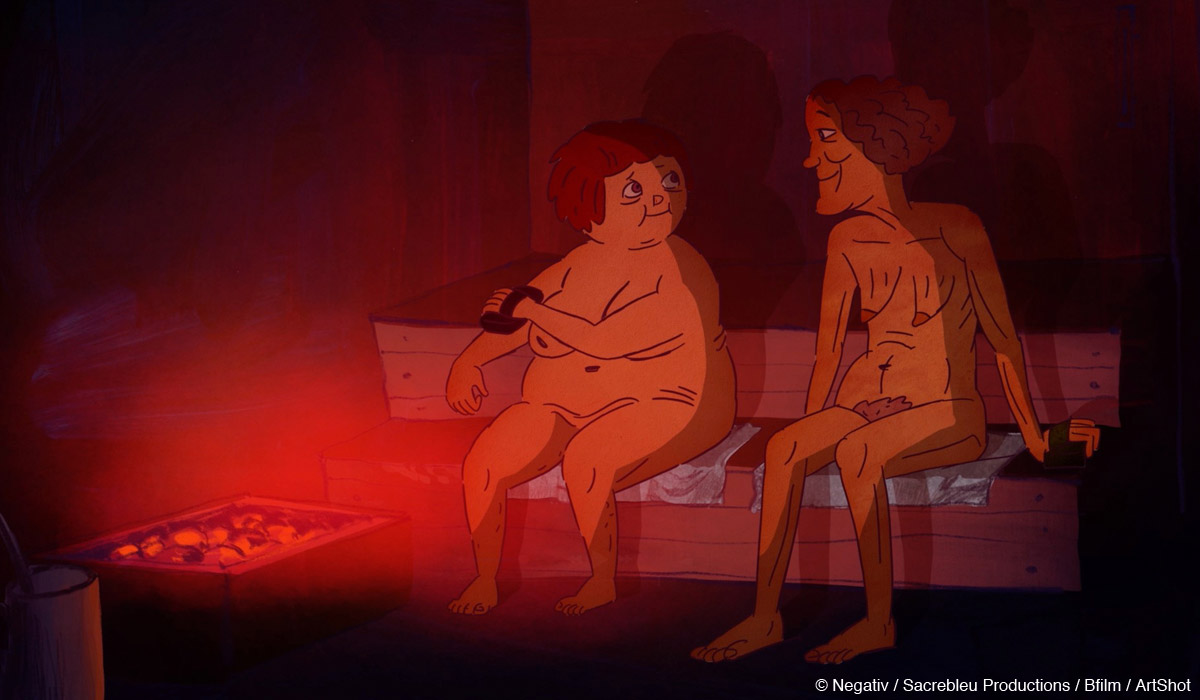
However, Božena does not give up. She feels full of energy. She tries to find a job, and after she ends up homeless, she finds salvation in her son’s family, especially in her granddaughter Helenka. Božena also finds her place and satisfaction among her peers in a retirement home.
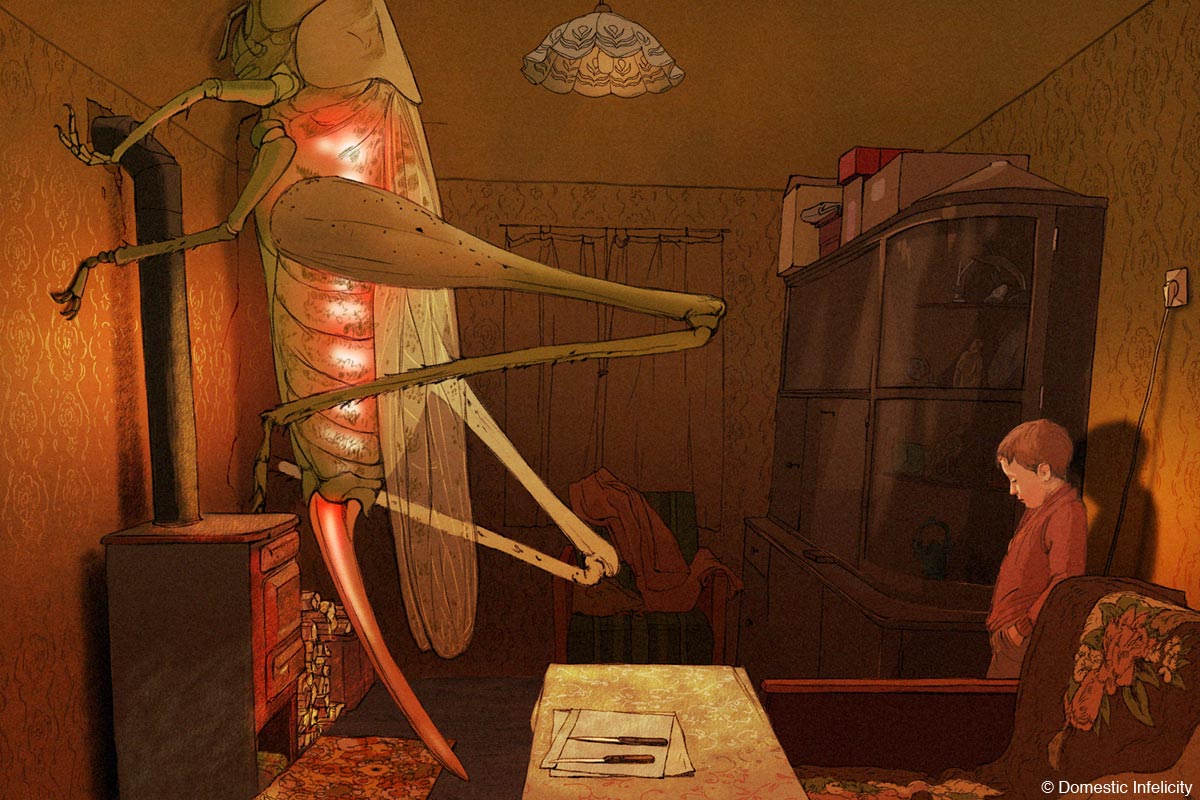
During the film, Božena ages and becomes fragile, eventually turning into a beetle. Even after being transformed into a beetle, she finds a way to true self-acceptance and discovers meaning in community and in the reflection of generations.
Our film has an overall bittersweet feeling, with emotions, black humour and a bit of incorrectness associated with physical aging and transformation. It depicts coming to terms with oneself, self-acceptance, and the perspective of a peaceful departure from the world, which is not to be feared because it is natural and inevitable.
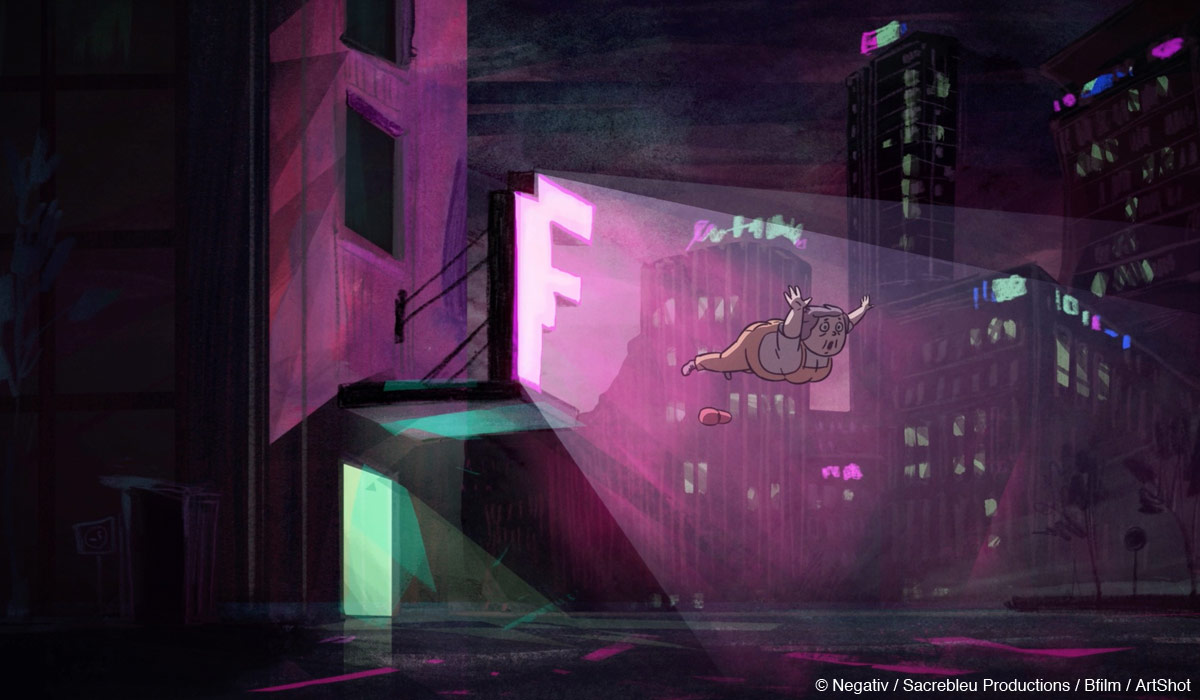
HN: Could you please let us know where the initial idea for the film’s story came from?
Michaela Pavlátová: When I turned 60, I felt different. I also noticed that people around me started to treat me in a different way than before. It was as like losing visibility and the importance we think we have. I had to get used to the fact that the time when we have to start handing over our positions to younger people is coming. I felt that I have to speak about it, to make a film about it.
Although we still feel quite young and full of energy, others do not see us that way anymore. The future generation is coming and nobody is interested in our experience. Sometimes it brings humiliating, embarrassing situations. But aging must be looked at with humour, and if our health allows it, we can still get a lot of joy.
I was interested in taking the theme of aging further, continuing where it is not that cheerful and bringing the motive of reconciliation with life. I hope that Night Tram can help the audience not to panic about aging because they are not alone in it.
HN: I would like to ask you about the project itself. The producers for this film project are the same as those for your previous film, My Sunny Maad. Could you please tell us how you began this film project with them? Was there anything different from My Sunny Maad?
Michaela Pavlátová: The producers at Negativ, a Czech film production company, and I enjoyed telling a story on a large scale of a feature animation film. And immediately after the completion of My Sunny Maad, we felt that we wanted to continue.
We found the topic quite early because we soon realized that we have a great heroine right in front of us – the tram driver from my short film Tram. She is an ordinary aging woman with unexpected energy that viewers can identify with. In the short film Tram, Božena dealt with her erotic fantasies, but now she is 15 years older and is facing her aging. Božena has more space in the feature film, her personality is more flexible, just like her story. We want to keep the comedic tone and self-irony of Tram, bringing it into bigger absurdity and exaggeration. As I’m developing the project again with Negativ, it was logical that we also approached Ron Dyens’ Sacrebleu Productions in France.
We gained many experiences through developing My Sunny Maad, but everything including the theme is different so that we’re facing new creative and artistic challenges.
HN: I would like to hear about the creative story behind the film’s story and visuals. Firstly, could you please let us know what you took care of and placed the highest importance on during the story development?
Michaela Pavlátová: First I looked for someone else’s script because I know how difficult it is for me to write a script for a feature film. However, Petr Oukropec, a producer at Negativ, motivated me to write my own story, to make a purely auteur film, where I would utilize what I had focused on in my short films – relationships, humour, self-irony and sex. I greatly appreciate his trust, motivation, and support. For the script I am collaborating with co-authors and dramaturgists (script doctors), without whom I could not make it.
In the script, I’m focusing primarily on experiencing the film through Božena. I want the audience to identify with her, to understand her, to go with her and keep their fingers crossed for her, even if she doesn’t always behave sympathetically. We are trying to handle the gloomy theme of ageing with humour, giving a lot of space to comical situations, while also offering some hope, because there is no other way.
HN: How did you design the visuals, such as the characters and the story universe? And what kinds of things did you focus on and pay attention to during that creation?
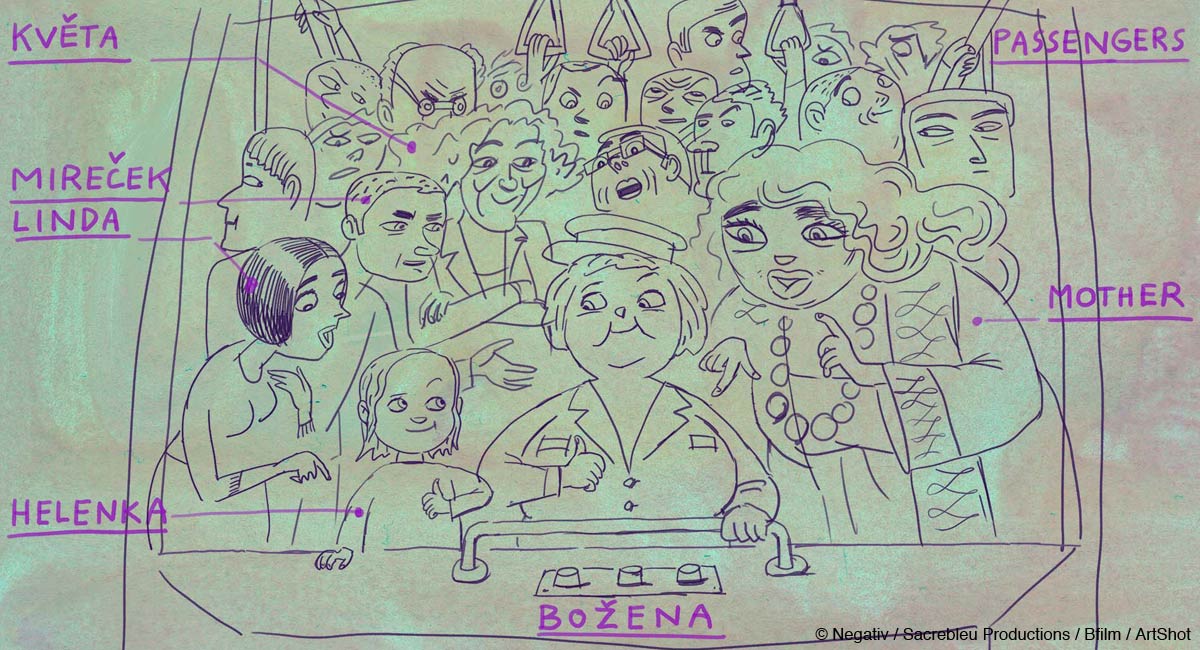
Michaela Pavlátová: In visuals, I focused the most on the main character, the tram driver Božena. She represents a normal, ordinary aging woman who has to gain the sympathy of the audience. I had to find the form of Božena that would be simple, yet have enough possibilities of facial expressions and be easy to animate.
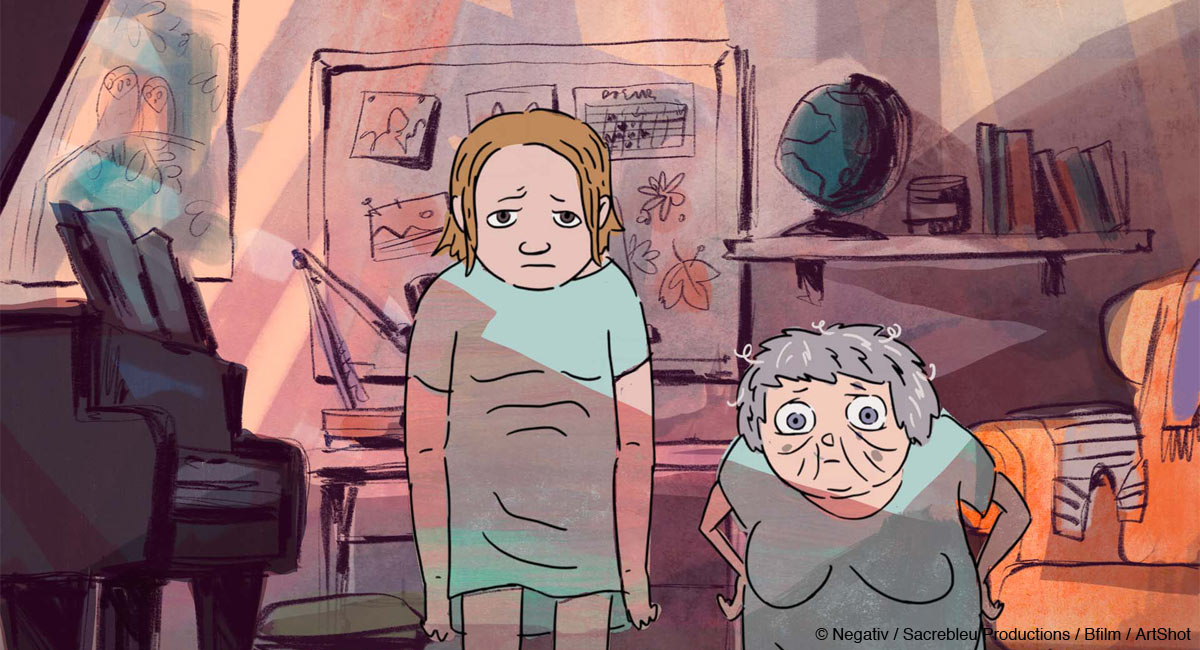
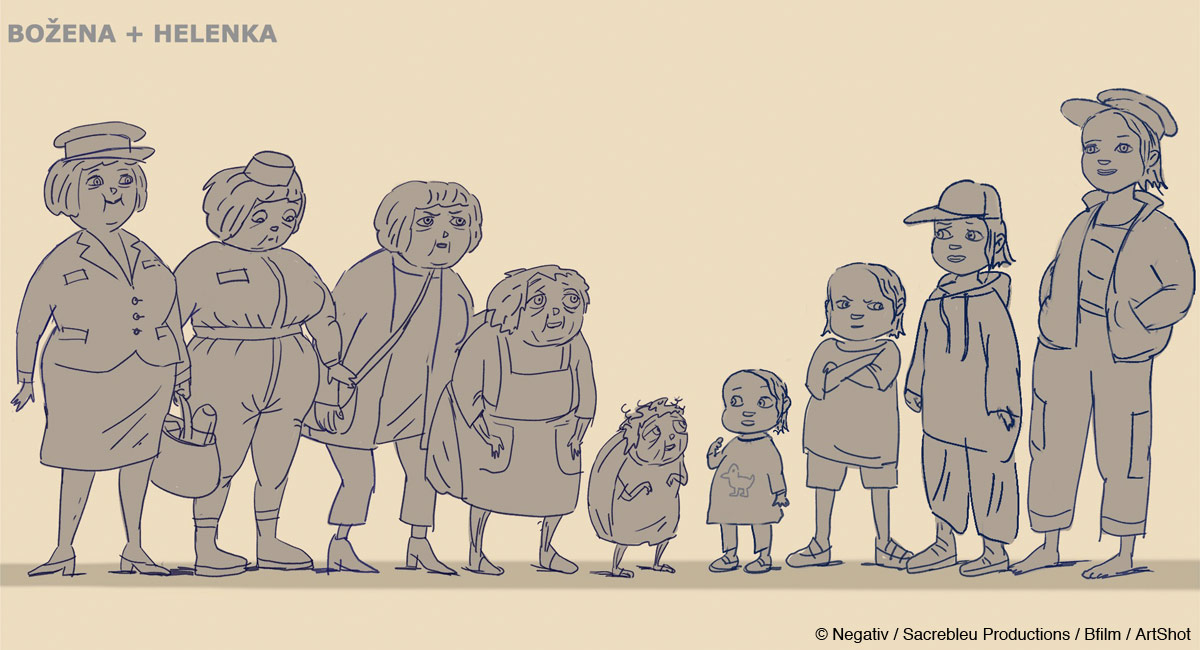
Other important characters are Božena’s deceased mother and her granddaughter Helenka. The challenge is to create Božena and Helenka through the changes of time, to design the types of Helenka from childhood to adolescence and also to create variations of Božena, who is transforming from her 60-ies to the form of a beetle.
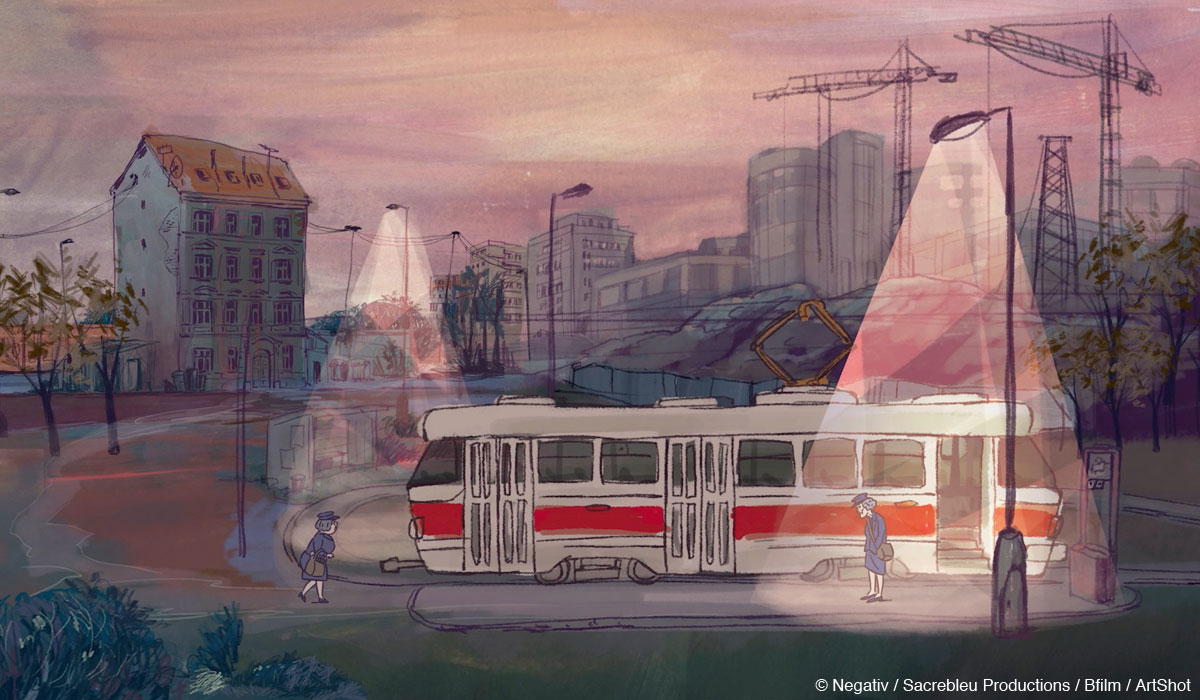
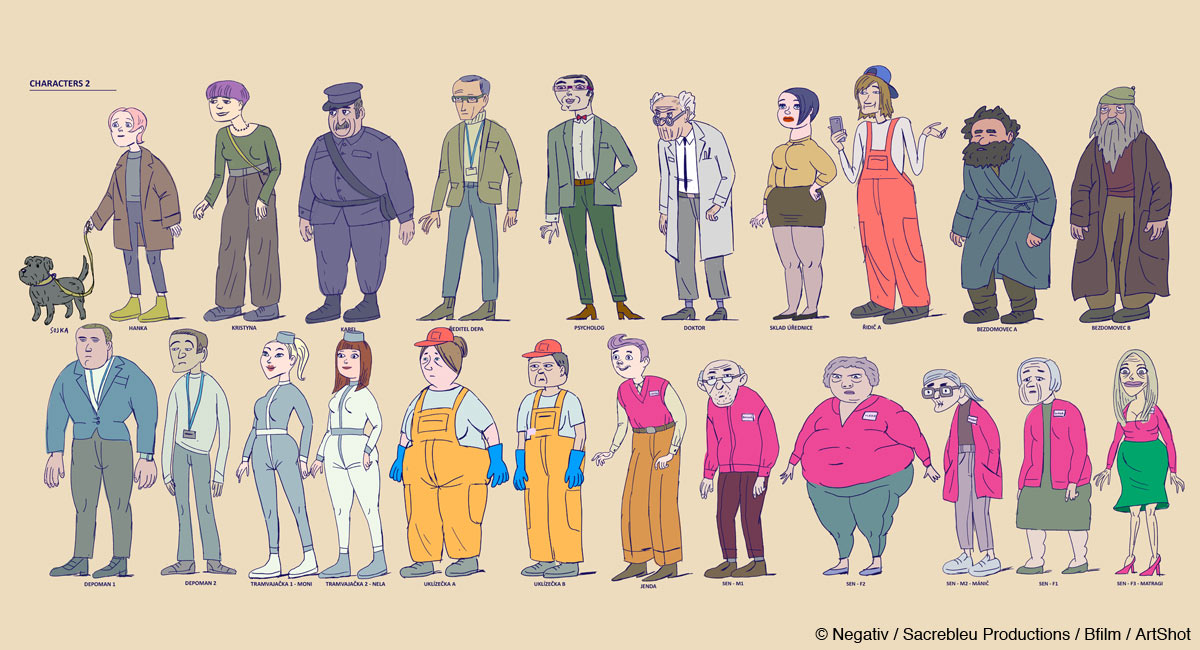
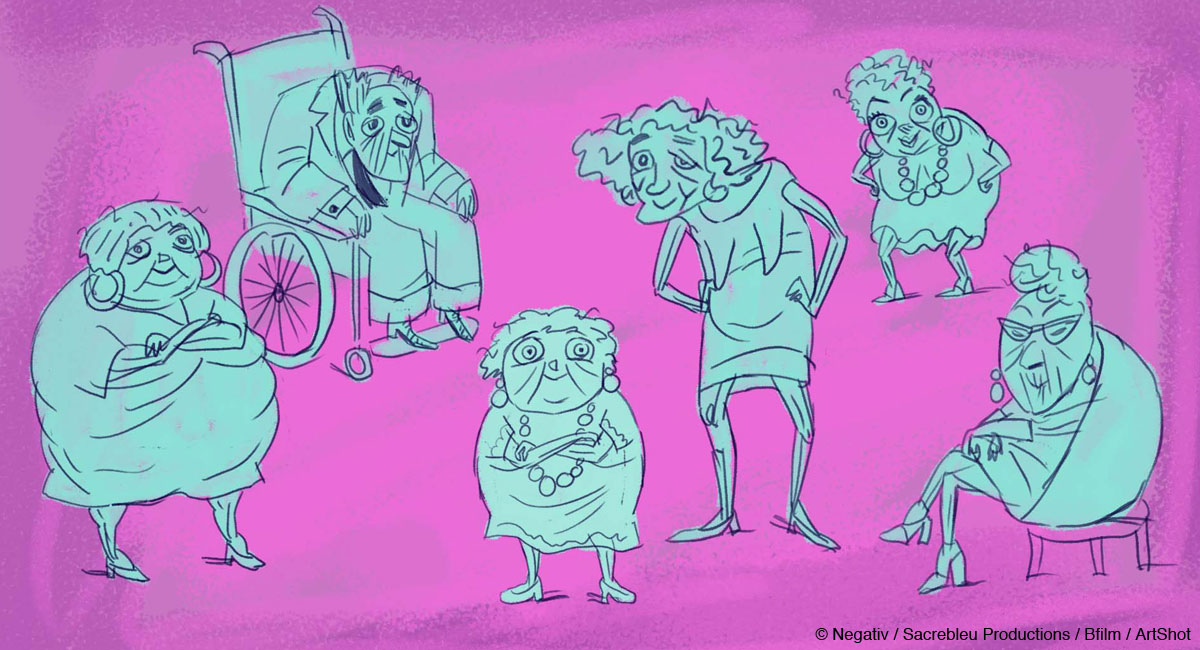
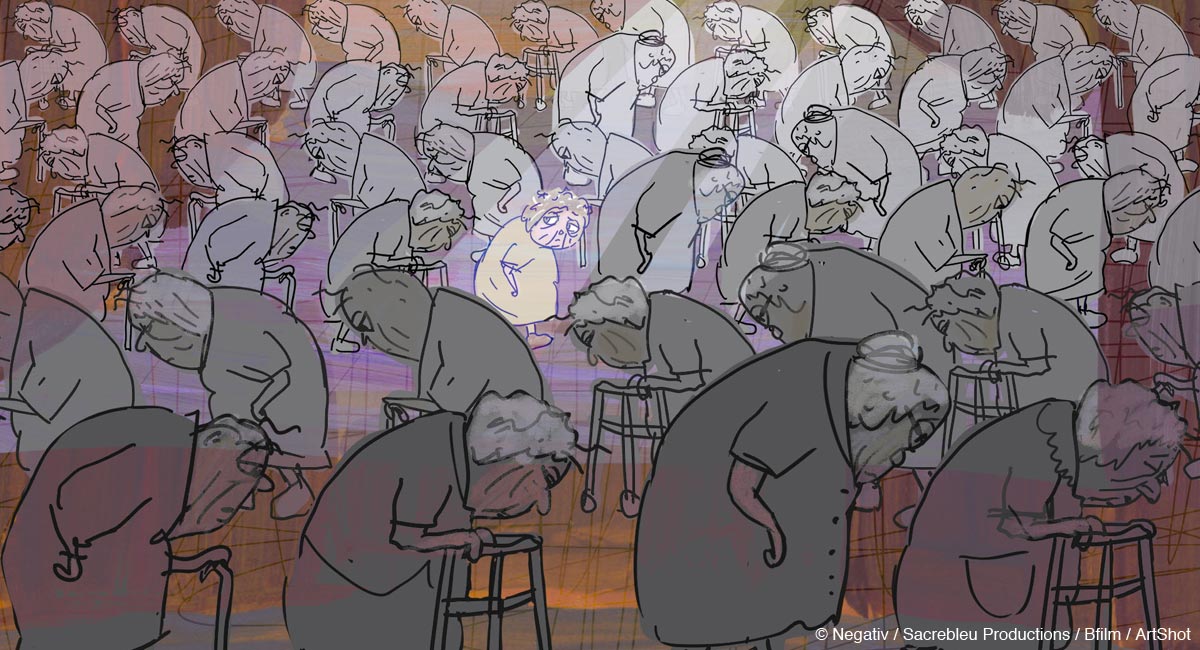
My Sunny Maad had a serious topic; it was a visually monochrome film. Night Tram will be a humorous film with many characters, environments and colours. The exaggeration in the script allows the characters to be more stylized and simplified.
For the backgrounds I am working with a young artist who has a great sense of colour, which I lack. We try to make the characters and also the backgrounds sketchy and vivid to give the film a light spirit.
My film talks about aging, and I don’t want it to seem old or outdated. I surrounded myself with young collaborators who bring a contemporary perspective and young energy to the film. Many of them are my former students. I try to listen to their comments and reflect on their observations.
HN: Regarding the film’s music, do you have anything you can share with our readers at this point?
Michaela Pavlátová: Our film is full of music. For now, we are using reference music because the composer has not been decided yet. But I am really looking forward to discussing the musical motifs together, developing the musical dramaturgy, and seeing how the film is strengthened and developed by the music.